

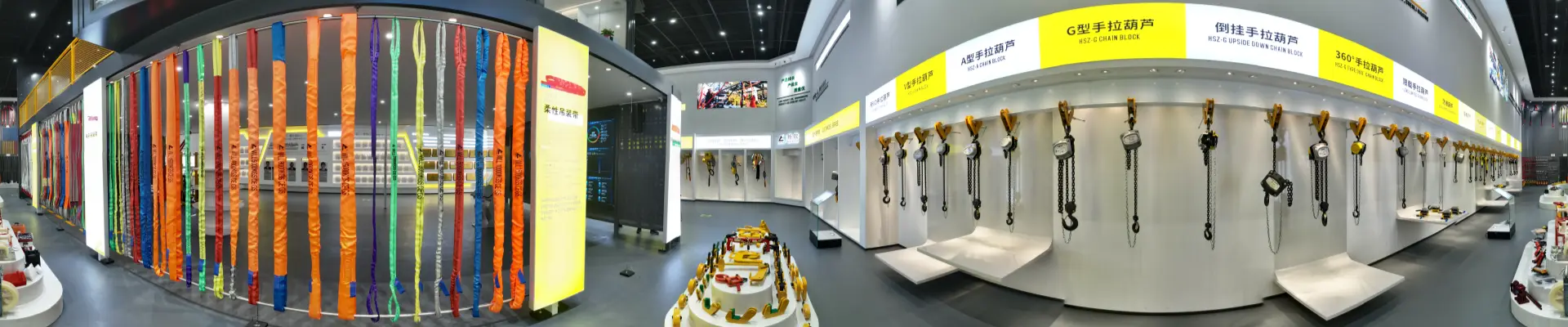
Manual Chain Hoist Manufacturer for Industrial Lifting Applications
Manual Chain Hoists, also known as hand chain blocks, are mechanical lifting devices designed to lift and position heavy loads without electricity. Operated by pulling a hand chain, these hoists provide precise load control and reliable lifting performance in various industrial environments.
-
Mechanical Core: Built with a premium dual-pawn Weston-style braking system and high-strength G80 load chains for millimeter-level positioning accuracy.
-
Rugged Enclosure: Impact-resistant stamped steel covers protect internal spur gears in non-electric, harsh industrial environments.
-
Versatile Frame: Available in a compact chain hoist design for tight workshops or a heavy duty manual chain hoist configuration for brutal shipyard rigging.
Secure your site safety—contact our technical sales team today for custom hand chain hoists configurations!
-

Standard Round Manual Chain Hoist | HSZ-A
-

0.5t-100t Heavy Duty Manual Chain Hoist | HSZ-D
-

Triangular Industrial Chain Hoist | HSZ‑G
-

Heavy Duty Manual Block | HSZ‑VD
-

Vital Lever Chain Block | HSZ-V
LDR supplies manual chain hoists for industrial lifting, equipment installation, maintenance and material handling. The HSZ range includes several mechanical designs, allowing buyers to compare not only rated capacity but also load-chain guidance, transmission structure, bearing arrangement, hand-pulling effort and available options.
These differences matter when selecting equipment for repeated lifting operations or demanding working environments. A hoist with a more rigid transmission support arrangement may suit buyers prioritizing stable operation, while a design with a simpler structure may be relevant when initial equipment cost is a key consideration. Cover design, chain-stop features, hook configuration and optional limit-load devices can also affect product selection.
The HSZ-A, HSZ-D, HSZ-G, HSZ-VD and HSZ-V models should therefore be evaluated by their confirmed construction and intended use, rather than treated as interchangeable products with different names.
LDR HSZ Manual Chain Hoist Product Range
The HSZ series includes traditional triangular-body designs, models with revised housing structures and models using a supported transmission arrangement. The following overview highlights their principal design characteristics.
| Model | Main Structural Characteristics | Key Purchasing Considerations |
|---|---|---|
| HSZ-V | Traditional triangular-body design; separate outer wall plate and cover; sliding-bearing arrangement described in the product comparison | Compact traditional design, product configuration and cost considerations |
| HSZ-A | Integrated outer wall plate and cover; integrated-bearing configuration | Housing rigidity and bearing arrangement |
| HSZ-D | Supported transmission structure; rolled cover edges; stop washer in the hand-chain wheel assembly | Stable running, lower hand-pulling effort and maintenance access |
| HSZ-VD | L-type design corresponding to the L type in the product comparison; supported transmission structure | Stable running, chain guidance and lifting requirements |
| HSZ-G | Square-body design; supported transmission structure; optional 360-degree hand-chain wheel cover | Structural configuration and approved special installation requirements |
Capacity range, chain specifications and lifting height must be checked against the current product specification for each model. Buyers should confirm the rated capacity and exact configuration required for their application before ordering.
HSZ-V Manual Chain Hoist: Traditional Triangular-Body Design
The HSZ-V is based on the traditional triangular-body hand chain hoist design described in the product comparison. Its outer wall plate and cover are separate components, and the load sprocket uses a sliding-bearing arrangement in the described configuration.
The comparison identifies the HSZ-V as a lightweight design with a long-established market format. Its mechanical arrangement differs from the supported transmission structure used in the D, L and G designs.
What this means for buyers
- The traditional structure provides a reference point when comparing the HSZ range by construction and cost.
- The sliding-bearing arrangement is described as having somewhat lower transmission efficiency than the integrated-bearing configurations in the comparison.
- Buyers should evaluate the HSZ-V against their expected operating frequency, required capacity and procurement budget rather than assuming that all triangular-body designs have the same internal structure.
The HSZ-V is a relevant option for buyers who prefer the traditional design, provided its rated capacity, configuration and operating requirements match the intended task.
Product details: HSZ-V Manual Chain Hoist
HSZ-A Manual Chain Hoist: Integrated Housing Design
The HSZ-A differs from the traditional HSZ-V in the outer housing structure. The product comparison describes the A design as having an integrated outer wall plate and cover, rather than the separate arrangement used on the V design.
The comparison also distinguishes the integrated-bearing A configuration from A1, which is described as the version without the integrated bearing. The HSZ-A page should use the specifications for the actual A configuration being supplied.
What this means for buyers
- The integrated housing is described as providing greater structural strength than the separate housing arrangement of the V design.
- The integrated-bearing configuration is intended to improve transmission efficiency compared with the sliding-bearing arrangement.
- Buyers should verify the precise A configuration when ordering, because bearing arrangement is a meaningful structural distinction, not merely a naming variation.
For purchasing teams, the main comparison points are housing construction, bearing configuration, capacity, lifting height and the product's intended operating conditions.
Product details: HSZ-A Hand Chain Hoist
HSZ-D Manual Chain Hoist: Supported Transmission Structure
The HSZ-D is positioned in the product comparison as a higher-grade design. Its transmission arrangement uses a load sprocket with an internal needle bearing working with the long-shaft gear. A bearing on the opposite side supports the shaft, forming a simply supported structure.
The comparison associates this arrangement with higher strength, smoother running and reduced hand-pulling effort. The D model also uses a hand-chain wheel assembly with a stop washer and a cover with rolled edges.
What this means for buyers
- Transmission support: The simply supported structure is intended to improve support of the shaft and contribute to more stable operation.
- Operating effort: The gear arrangement is described as using a higher gear ratio, helping reduce the force required to pull the hand chain.
- Chain-end protection: The stop washer helps prevent the chain wheel and nut from locking when the load chain reaches its lower limit, reducing the risk of a problematic end-of-travel condition.
- Cover construction: Rolled cover edges are described as providing greater strength than the unrolled edge design used on the V and A models.
- Maintenance: The brake-seat connection uses a spline connection rather than the traditional threaded connection described for V and A. The comparison identifies this arrangement as easier to install and maintain.
For buyers handling repeated lifting tasks, these structural differences are useful when evaluating operating effort, transmission support and maintenance requirements alongside rated capacity.
Product details: HSZ-D Hand Chain Hoist
HSZ-VD Manual Chain Hoist: L-Type Design
The HSZ-VD corresponds to the L-type design in the product comparison. Its transmission structure shares key features with the D model, including the supported shaft arrangement, internal needle bearing at the load sprocket and a hand-chain wheel assembly with a stop washer.
The L-type design also uses rolled cover edges and a chain guide plate. These components are relevant to the mechanical protection and operation of the hoist.
What this means for buyers
- Running stability: The supported transmission arrangement is intended to improve shaft support and contribute to smoother operation.
- Hand-chain operation: The higher gear ratio described for the D and L designs is intended to reduce hand-pulling effort.
- Chain guidance: The guide plate helps reduce the chance of rainwater or foreign material entering the area between the load chain and sprocket, which can contribute to abnormal operation.
- End-of-travel protection: The stop washer helps prevent the chain wheel and nut from locking when the load chain reaches its lower limit.
- Maintenance access: The spline connection described in the product comparison is intended to simplify assembly and maintenance.
When comparing HSZ-VD with HSZ-V or HSZ-A, buyers should focus on the confirmed transmission structure, chain-guidance arrangement, required lifting capacity and the working conditions for which the equipment will be used.
Product details: HSZ-VD Hand Chain Hoist
HSZ-G Manual Chain Hoist: Square-Body Design
The HSZ-G has a square-body design that distinguishes it from the traditional triangular-body HSZ-V. The product comparison describes the G model as having a strong overall structure and a supported transmission arrangement similar to those of the D and L designs.
An optional 360-degree hand-chain wheel cover is available according to the product comparison. The comparison also states that the design can be adapted for inverted installation in special applications. Such an arrangement must be confirmed for the actual configuration and used only when permitted by the manufacturer's instructions.
What this means for buyers
- Body structure: The square housing provides a distinct structural format for buyers comparing different hoist designs.
- Transmission support: The supported shaft arrangement is intended to improve running stability and reduce hand-pulling effort.
- Cover options: The optional 360-degree cover may be relevant when the installation calls for additional hand-chain wheel coverage.
- Special installation: Buyers considering inverted installation should confirm the approved configuration, mounting requirements and operating restrictions before specifying the equipment.
The HSZ-G is particularly worth evaluating when housing design or a special installation arrangement is an important part of the purchasing decision.
Product details: HSZ-G Hand Chain Hoist
HSZ Model Comparison: Which Structural Differences Matter?
The following table consolidates the mechanical distinctions described in the product comparison and explains their relevance to procurement.
| Component or Feature | HSZ-V | HSZ-A | HSZ-D | HSZ-VD / L Type | HSZ-G |
|---|---|---|---|---|---|
| Body structure | Separate outer wall plate and cover | Integrated outer wall plate and cover | Supported transmission design; rolled cover edges | Supported transmission design; rolled cover edges | Square body; optional 360-degree cover |
| Load sprocket support | Sliding bearing | Integrated bearing | Internal needle bearing with supported shaft arrangement | Internal needle bearing with supported shaft arrangement | Internal needle bearing with supported shaft arrangement |
| Transmission design | Traditional arrangement | Traditional arrangement with integrated housing | Simply supported shaft arrangement | Simply supported shaft arrangement | Simply supported shaft arrangement |
| Gear characteristics | High-strength alloy-steel gears with heat treatment | High-strength alloy-steel gears with heat treatment | Higher gear ratio described in the comparison | Higher gear ratio described in the comparison | Higher gear ratio described in the comparison |
| Hand-pulling effort | Comparison indicates the sliding-bearing arrangement has slightly lower efficiency | Bearing arrangement is intended to improve efficiency | Designed for smoother running and reduced hand-pulling effort | Designed for smoother running and reduced hand-pulling effort | Designed for smoother running and reduced hand-pulling effort |
| Hand-chain wheel assembly | Conventional hand-chain wheel without the stop-washer arrangement described for D/L/G | Conventional hand-chain wheel without the stop-washer arrangement described for D/L/G | Stop washer helps prevent the chain wheel and nut from locking at the lower chain limit | Stop washer helps prevent the chain wheel and nut from locking at the lower chain limit | Stop washer helps prevent the chain wheel and nut from locking at the lower chain limit |
| Brake-seat connection | Traditional threaded connection | Traditional threaded connection | Spline connection | Spline connection | Spline connection |
| Chain guide plate | Confirm the exact configuration | Guide plate described | Guide plate described | Guide plate described | Guide plate described |
| Hook design | 20Cr alloy-steel hook; fishhook-style shape | 20Cr alloy-steel hook; fishhook-style shape | Large-opening hook; cast-steel latch plate | Large-opening hook; cast-steel latch plate | Large-opening hook; cast-steel latch plate |
| Optional limit-load device | Confirm model availability | Confirm model availability | Optional | Optional | Optional |
| Special installation | Standard approved arrangement | Standard approved arrangement | Confirm the intended arrangement | Confirm the intended arrangement | Inverted installation described for special applications; confirm approval |
The HSZ-D, HSZ-VD and HSZ-G designs share several structural characteristics, but they should not be treated as identical products. Housing format, cover options, rated capacity and installation requirements still need to be matched to the specific application.
Why Gear and Bearing Design Matters
The product comparison identifies high-strength alloy steel and controlled heat treatment for the long-shaft gears across the range. It also describes high-strength alloy steel and heat treatment for the short-shaft gear assemblies and spline gears. These components form part of the transmission system that transfers manual input into lifting movement.
The D, L and G designs add a supported shaft arrangement and a different load-sprocket bearing configuration. The comparison associates this structure with greater strength, smoother running and lower hand-pulling effort.
For buyers, these differences should be considered in context:
- Operating effort: A gear ratio designed to reduce hand-pulling force may be relevant where operators perform repeated lifting tasks.
- Running characteristics: Shaft support and bearing arrangement can affect how the transmission operates under the intended working conditions.
- Maintenance planning: The connection method and accessibility of components matter when assessing inspection and servicing requirements.
- Total purchasing value: Buyers should consider expected use, maintenance requirements and product specifications together, rather than comparing purchase price alone.
These design descriptions explain the intended engineering differences. They do not replace rated-capacity limits, inspection requirements or the manufacturer's operating instructions.
Load Chain, Hooks and Chain Guidance
The product comparison describes the load sprocket as using high-strength ductile cast iron across the listed designs. It also identifies differences in bearing support, chain guidance and hook construction.
Chain Guidance and Protection
The A, D, L and G descriptions refer to guide plates intended to help prevent rainwater and foreign material from entering the area around the load sprocket. The D, L and G designs also include the stop-washer arrangement in the hand-chain wheel assembly.
For buyers, these features are relevant when considering the operating environment and the need to reduce the risk of abnormal chain-wheel operation. They should be evaluated alongside the actual installation conditions and maintenance instructions.
Hook Configuration
The V and A models are described with 20Cr alloy-steel hooks in a fishhook-style shape. The D, L and G models use a larger-opening hook intended to accommodate thicker objects. Their latch plates are described as cast steel, while the hook frames use stamping processes.
This distinction can matter when the attachment point or connected equipment has a larger cross-section. Buyers should check the hook opening, throat dimensions and permitted loading arrangement against the actual load attachment.
Optional Lower Hook and Other Accessories
The comparison identifies a bearing-equipped lower hook as an optional configuration. It also lists a cast-steel trapezoidal ring and an adjustable chain-end ring as options in the relevant product range.
Availability should be confirmed by model and capacity. Buyers should specify these requirements during quotation rather than assuming that every accessory is included as standard.
How to Select the Right HSZ Manual Chain Hoist
Start with Capacity and Lifting Height
Determine the maximum load, required vertical travel and installation clearance. Then match these requirements to the model's rated capacity, standard lift and available chain configuration.
The complete capacity and dimensional specifications should be checked for the exact model. Capacity alone does not determine whether a hoist fits the installation.
Compare Operating Effort and Use Frequency
For repeated manual lifting, hand-pulling effort and running characteristics may influence operator experience. The supported transmission designs described for D, L and G are intended to improve running stability and reduce the effort required to pull the hand chain.
Where lifting frequency is low and budget is a primary consideration, buyers may assess the traditional V design as an alternative. The final selection should reflect the actual workload and product specifications.
Review the Installation and Cover Requirements
The G model has a square body and an optional 360-degree hand-chain wheel cover. Special installation arrangements, including inverted installation, require confirmation for the exact configuration.
Buyers should define mounting conditions and available clearance before requesting a quotation. An installation method should never be assumed to be acceptable solely because the hoist's body shape appears suitable.
Check Maintenance and Safety-Related Options
The spline connection described for D, L and G is intended to simplify installation and maintenance compared with the traditional threaded connection described for V and A. The stop-washer arrangement in D, L and G is intended to prevent the chain wheel and nut from locking at the lower chain limit.
D, L and G can also be configured with an optional limit-load device according to the product comparison. Buyers should confirm availability and technical details for the selected model. An optional device does not replace correct equipment selection, inspection or safe operating practice.
Manual Chain Hoist vs. Lever Hoist
Manual chain hoists and lever hoists use different operating mechanisms and are selected for different handling requirements. Manual chain hoists are commonly used for lifting suspended loads, while lever hoists can be used for lifting, pulling, tensioning and positioning where the selected model is approved for the task.
Buyers should compare the required movement, available clearance, rated capacity, chain configuration and operating instructions before choosing between the two categories.
For alternative manual lifting equipment, see the LDR lever hoist range.
Quality, Testing and Product Documentation
Industrial buyers should review the current product specification, operating manual and applicable inspection documentation before purchasing a manual chain hoist. Where a project requires particular standards or test records, these should be identified during the enquiry process.
Certification and testing claims should correspond to the exact model and configuration supplied. Buyers should confirm the applicable documents, model coverage and validity before relying on them for market compliance or project approval.
OEM, ODM and Customization
For distribution and project procurement, buyers should specify the required model, rated capacity, lifting height, chain configuration, quantity, destination market and documentation requirements.
Branding, packaging, labels and other options can be discussed during quotation where available. Custom configurations should be reviewed for technical feasibility and production requirements before an order is confirmed.
Frequently Asked Questions
What is the main difference between HSZ-V and HSZ-A?
The HSZ-V uses a separate outer wall plate and cover, while the HSZ-A uses an integrated housing structure. The product comparison also describes a sliding-bearing arrangement for V and an integrated-bearing configuration for A. These differences affect the structural design and intended transmission efficiency.
Why are HSZ-D, HSZ-VD and HSZ-G described as higher-grade designs?
The product comparison describes a supported shaft arrangement, a different load-sprocket bearing configuration and a higher gear ratio for these designs. These features are intended to improve running stability and reduce hand-pulling effort. The models still differ in body structure, cover options and installation requirements.
What does the stop washer do?
In the D, L and G designs, the stop washer is described as helping prevent the hand-chain wheel and nut from locking when the load chain reaches its lower limit. Buyers should still follow the manufacturer's operating and inspection instructions.
What is the benefit of a spline connection?
The D, L and G designs use a spline connection between the brake seat and long shaft, while the V and A descriptions specify a traditional threaded connection. The product comparison identifies the spline arrangement as easier to install and maintain.
Can the HSZ-G be installed upside down?
The product comparison describes inverted installation for special applications, with the optional 360-degree hand-chain wheel cover. The exact configuration and permitted installation conditions must be confirmed with the manufacturer before use.
Are limit-load devices available?
The product comparison lists an optional limit-load device for the D, L and G models. Buyers should confirm the available configuration, rated capacity and documentation for the specific order.
What information should I provide for a quotation?
Provide the required capacity, lifting height, installation conditions, intended application, quantity and destination market. Include any requirements for the hook configuration, optional accessories, documentation or packaging.