

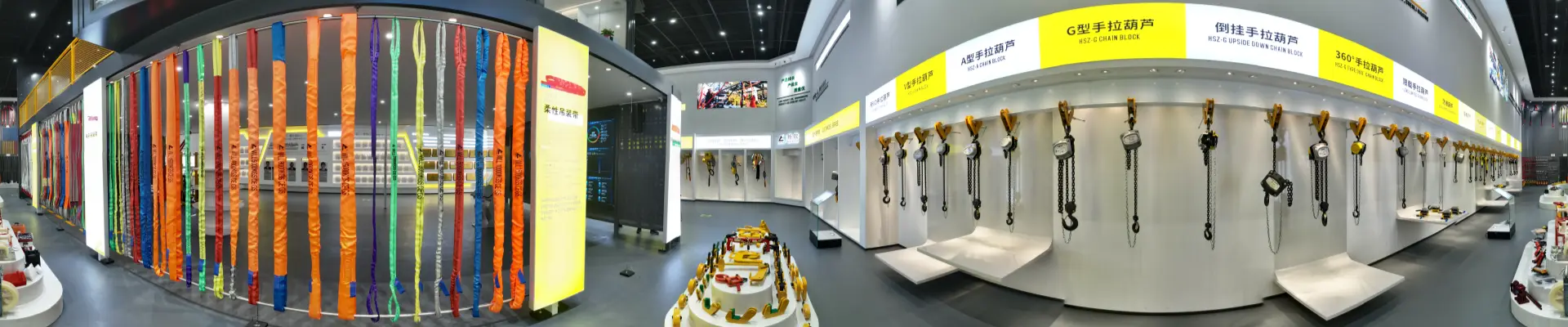
Electric Wire Rope Hoist
Electric Wire Rope Hoists are powerful lifting machines designed for handling heavy loads in industrial environments. Using a durable steel wire rope and electric motor system, these hoists provide high lifting capacity, smooth operation, and reliable performance.
LDR supplies electric wire rope hoists for industrial lifting, workshop material handling, warehouse operations, and overhead crane systems. As an electric wire rope hoist manufacturer and supplier, LDR helps buyers select the right hoist by matching rated capacity, lifting height, lifting speed, installation arrangement, power supply, and operating frequency to the requirements of each application.
-
Mechanical Core: Built with high-tensile steel wire ropes. Features an automatic cone brake system that locks instantly when power cuts off.
-
Safety Controls: Equipped with safety upper and lower limit switches. These prevent cable over-travel and structural drum damage.
-
Smooth Travel: Precision-machined rope guides ensure even cable winding. This setup eliminates overlapping and rope tangling during lifts.
Improve your workshop efficiency today—contact our sales team for specific electric wire rope hoist factory price.
Electric Wire Rope Hoist Models
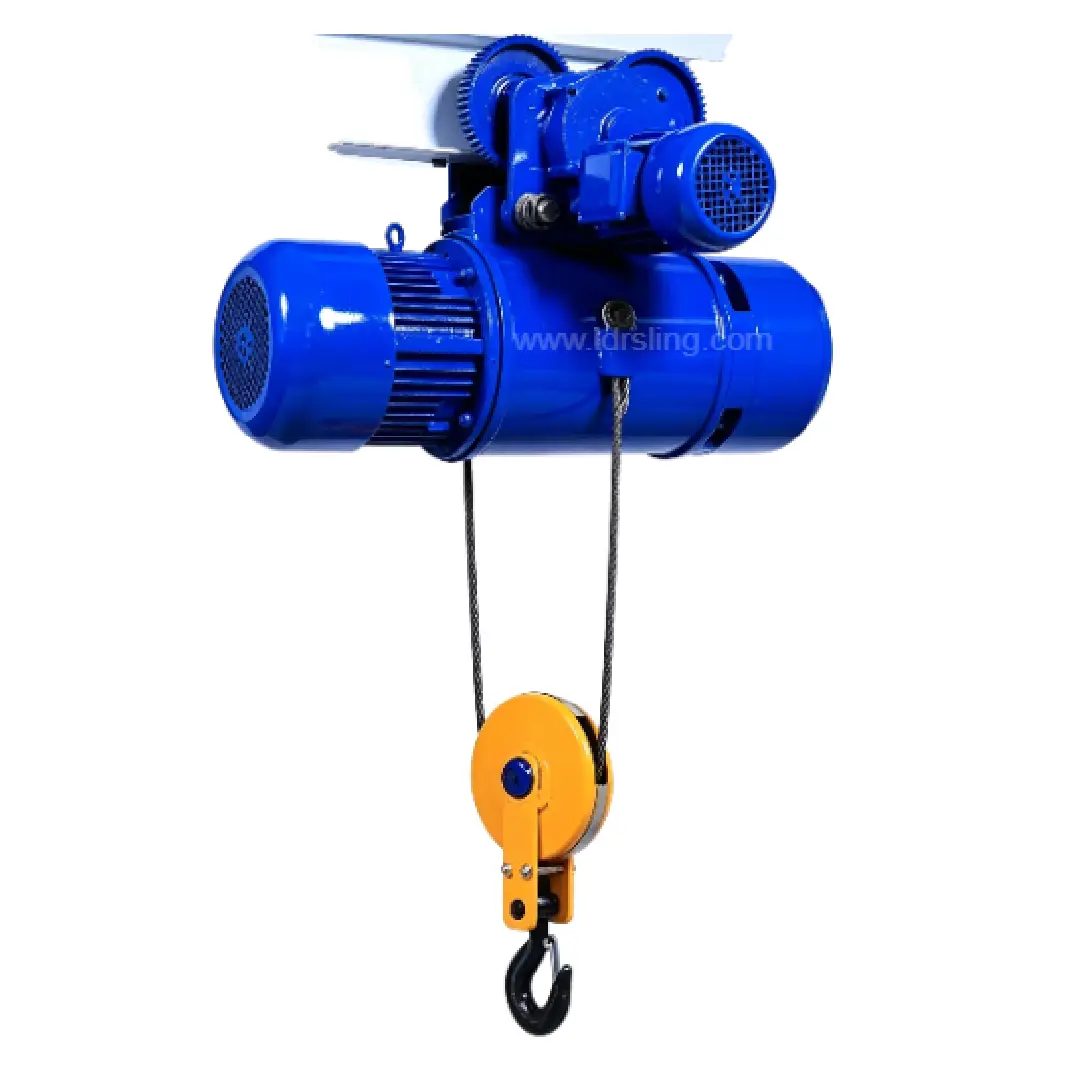
CD1 Electric Wire Rope Hoist
The CD1 electric wire rope hoist is designed for industrial lifting applications that require a motor-driven wire rope mechanism, controlled lifting, and compatibility with fixed installations or suitable overhead crane systems.
The CD1 series uses a single-speed lifting mechanism. Its rated capacity, lifting speed, wire rope diameter, motor power, and mounting dimensions should be matched to the required load and crane configuration.
Key features
- Rated capacities include 3 ton, 5 ton, and 10 ton configurations.
- Single-speed lifting for routine industrial material handling.
- Steel wire rope and grooved drum arrangement for controlled rope winding.
- Electric motor and reduction gearbox for powered lifting.
- Electromagnetic braking system for load holding when lifting power is interrupted.
- Upper and lower travel limit switches to help prevent overtravel.
- Pendant control, with remote control available for compatible configurations.
- Fixed installation or compatible trolley mounting, depending on the selected configuration.
Typical applications
- Factory workshops and production lines
- Warehouses and distribution facilities
- Machinery installation and maintenance
- Material handling stations
- Single-girder overhead crane systems
- Industrial equipment assembly areas
CD1 Standard Technical Specifications
| Parameter | CD1-3T | CD1-5T | CD1-10T |
|---|---|---|---|
| Rated lifting capacity | 3,000 kg | 5,000 kg | 10,000 kg |
| Standard lifting speed | 8 m/min | 8 m/min | 7 m/min |
| Hoisting motor power | 4.5 kW | 7.5 kW | 13 kW |
| Wire rope diameter | 13 mm | 15 mm | 15 mm |
| Wire rope construction | 6×37+1 | 6×37+1 | 6×37+1 |
| Standard working duty classification | M3 | M3 | M3 |
| Typical trolley travelling speed | 20 m/min | 20 m/min | 20 m/min |
| Power supply | Three-phase AC | Three-phase AC | Three-phase AC |
| Typical supply configuration | 380 V, 50 Hz | 380 V, 50 Hz | 380 V, 50 Hz |
The specifications above represent a common market configuration for CD1 single-speed electric wire rope hoists. The final technical data sheet must correspond to the actual LDR model supplied.
Installation and Mounting
CD1 hoists can be supplied in fixed or trolley-mounted arrangements, depending on the lifting system. Installation planning should account for the rated load, beam or rail profile, available headroom, hook approach, lifting height, trolley clearance, and required maintenance access.
The overall dimensions and installation dimensions depend on the hoist capacity, lifting height, trolley arrangement, and selected configuration. LDR provides a model-specific dimensional drawing for equipment selection and installation planning.
Before ordering, please confirm your required lifting height, supporting beam specifications, available headroom, power supply, and control method. The selected hoist must be compatible with the supporting structure and the intended duty cycle.
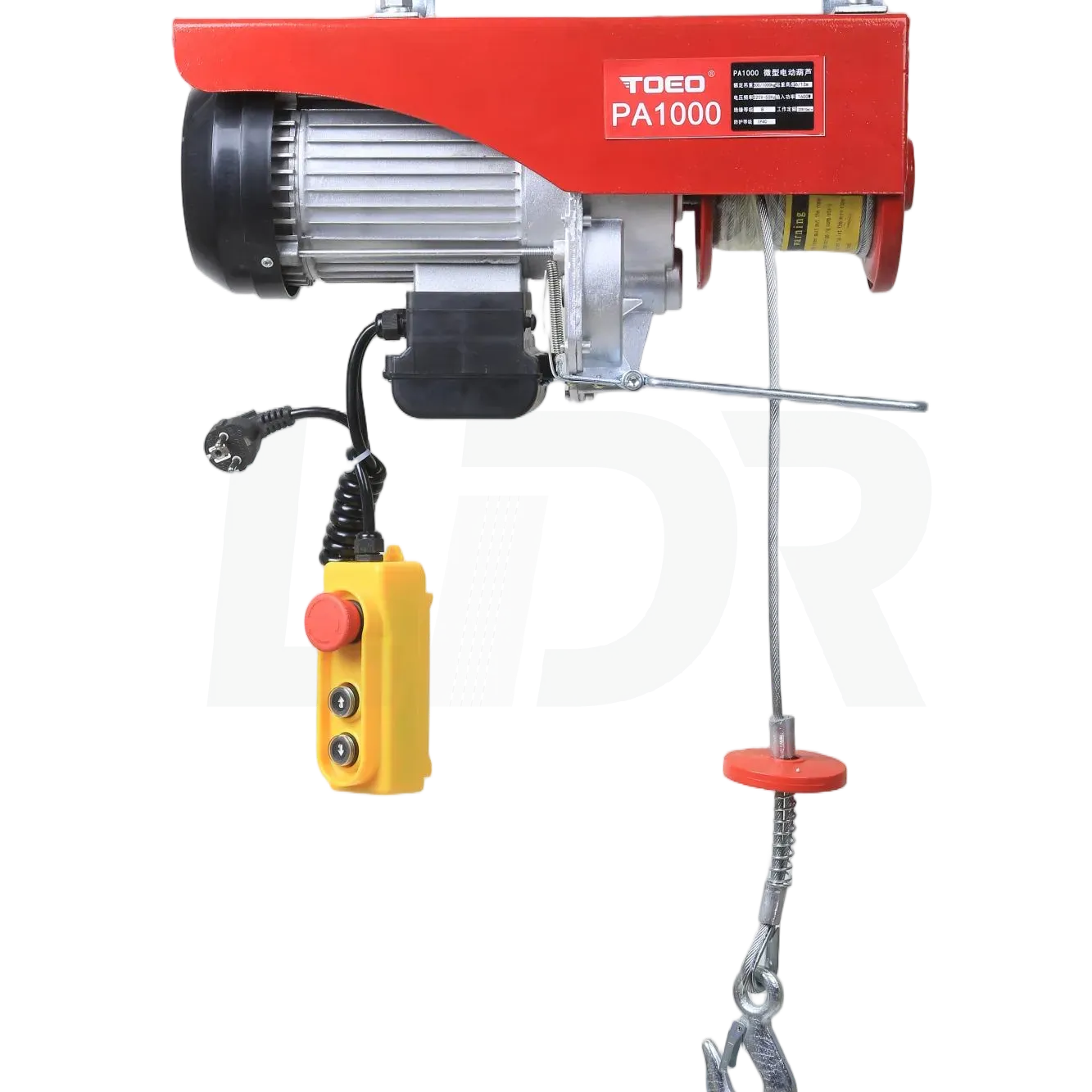
PA1000 Miniature Electric Wire Rope Hoist
The PA1000 miniature electric wire rope hoist is intended for light-duty, intermittent lifting in workshops, warehouses, maintenance areas, and small production facilities. Its compact format and single-phase power supply make it suitable for applications where a conventional industrial hoist is not required.
The PA1000 uses a wire rope and pulley arrangement to provide two lifting configurations: single-line lifting for a 500 kg rated load and double-line lifting for a 1,000 kg rated load.
Key features
- 500 kg rated capacity in single-line configuration.
- 1,000 kg rated capacity in double-line configuration.
- 1,600 W motor input power.
- 8 m/min lifting speed in single-line configuration.
- 4 m/min lifting speed in double-line configuration.
- 12 m lifting height in single-line configuration.
- 6 m lifting height in double-line configuration.
- 220/230 V, 50/60 Hz power supply configuration.
- Upper travel limit protection.
- Motor thermal protection.
- Hook safety latch and electric braking system.
- Wired pendant control, with compatible remote-control options.
PA1000 Technical Specifications
| Parameter | Specification |
|---|---|
| Model | PA1000 |
| Rated capacity, single-line lifting | 500 kg |
| Rated capacity, double-line lifting | 1,000 kg |
| Motor input power | 1,600 W |
| Lifting speed, single-line lifting | 8 m/min |
| Lifting speed, double-line lifting | 4 m/min |
| Lifting height, single-line lifting | 12 m |
| Lifting height, double-line lifting | 6 m |
| Power supply | 220/230 V, 50/60 Hz |
| Control | Wired pendant control |
| Safety features | Electric brake, upper travel limit, motor thermal protection, hook safety latch |
The rated capacity depends on the rope arrangement. The 1,000 kg rating applies to the double-line configuration and must not be used as the rated capacity for single-line lifting.
The PA1000 is designed for intermittent light-duty operation. For frequent lifting, high duty cycles, or demanding industrial production environments, a suitable industrial wire rope hoist such as the CD1 series should be selected according to the required working duty.
Key Components and Design Considerations
Steel Wire Rope and Rope Drum
The wire rope transfers the lifting force between the hoist mechanism and the load. Rope diameter, construction, reeving arrangement, and compatibility with the drum and sheaves affect lifting performance and service life.
The CD1 series uses a multi-strand steel wire rope arrangement matched to the hoist capacity. The rope drum and rope guide support orderly winding and help reduce rope displacement during operation.
When selecting lifting equipment for continuous or repetitive operations, it is necessary to verify the wire rope specifications, reeving method, lifting height, and replacement requirements.
Lifting Motor and Gearbox
The lifting motor supplies the power required to raise the rated load. Motor power must be matched to the rated capacity, lifting speed, operating frequency, and working duty.
The CD1 series uses a motor-driven lifting mechanism with a reduction gearbox to provide the torque required for industrial lifting. The PA1000 uses a compact motor arrangement for light-duty lifting applications.
For replacement projects and crane integration, buyers should confirm the rated voltage, frequency, phase, motor power, control arrangement, and compatibility with the existing electrical system.
Braking System
The brake is a critical part of the lifting mechanism. It helps hold the load when the lifting command stops or the power supply is interrupted.
The CD1 industrial hoist uses an electromagnetic braking arrangement. The PA1000 miniature hoist incorporates an electric braking system suitable for its light-duty application.
Brake inspection and maintenance should follow the operating instructions for the selected model. The hoist must never be operated above its rated capacity.
Limit Protection and Load Handling
Upper and lower limit switches help prevent the lifting mechanism from travelling beyond its designed operating range. The PA1000 configuration includes upper travel limit protection and motor thermal protection.
Overload protection is a separate safety function and should be specified according to the required configuration. Buyers should confirm the overload protection arrangement when it is required by the application, crane design, or applicable regulations.
Hook and Load Connection
The hook connects the hoist to the load and must be compatible with the rated capacity and lifting arrangement. A safety latch helps prevent the load attachment from accidentally slipping out of the hook opening.
Before operation, inspect the hook, latch, wire rope, rope anchorage, and load attachment. Do not use a hoist with a damaged hook, distorted components, or visibly damaged wire rope.
Safety, Quality, and Supplier Evaluation
Choosing an electric wire rope hoist involves more than comparing lifting capacity and price. Buyers should assess the complete lifting system, safety functions, technical documentation, and the supplier's ability to support installation and maintenance.
Safety Features to Check
- Rated capacity clearly marked on the hoist.
- Braking system suited to the lifting mechanism.
- Travel limit protection appropriate to the model.
- Hook and safety latch in serviceable condition.
- Correct wire rope specification and reeving arrangement.
- Motor and electrical components matched to the intended power supply.
- Overload protection specified where required.
- Operating instructions, inspection procedures, and maintenance guidance.
Certified Quality & International Compliance
At LDR, quality assurance is built into our manufacturing and supply processes. Our published credentials include ISO 9001 Quality Management, ISO 14001 Environmental Management, ISO 45001 Occupational Health and Safety, CE, GS, and CCS-related certifications and documentation, demonstrating our commitment to quality management, product safety, and international market requirements.
We combine quality management practices with product testing, engineering expertise, and OEM/ODM manufacturing capabilities to support industrial buyers, distributors, and project contractors. From routine equipment sourcing to customized lifting requirements, LDR works to deliver dependable products backed by professional manufacturing and quality assurance.
For electric wire rope hoist projects, our team supports buyers with relevant product documentation and applicable conformity information for the selected model and configuration. This helps procurement teams assess product suitability, meet project documentation requirements, and make informed purchasing decisions.
Technical Expertise & Project Support
Choosing an electric wire rope hoist requires more than matching lifting capacity and price. Motor performance, braking systems, lifting height, installation requirements, operating conditions, and maintenance access all influence the suitability of the equipment.
With over 20 years of manufacturing and export experience, LDR combines engineering expertise, R&D capabilities, and OEM/ODM services to support different industrial lifting requirements. We help buyers identify key technical specifications, evaluate installation arrangements, and select suitable product configurations for their applications.
Whether you are sourcing equipment for a workshop, integrating a hoist into an overhead crane system, or purchasing lifting equipment for distribution, LDR provides responsive technical assistance to support your procurement process.
Partner with LDR for quality-focused manufacturing, customized lifting solutions, and professional support for your industrial equipment requirements.
Applications of Electric Wire Rope Hoists
LDR electric wire rope hoists support a range of material handling requirements.
- Manufacturing: lifting components, fixtures, and production materials between workstations.
- Warehousing: moving goods and equipment within suitable lifting areas.
- Machine installation: positioning industrial equipment during installation and maintenance.
- Overhead crane systems: providing powered lifting as part of a compatible crane assembly.
- Workshop maintenance: lifting machinery parts and service equipment.
- Light-duty lifting: using the PA1000 for intermittent lifting where its rated capacity and operating duty are suitable.
The correct model depends on the maximum load, lifting height, operating frequency, available headroom, mounting arrangement, and site power supply.
How to Select the Right Electric Wire Rope Hoist
Before requesting a quotation, prepare the following information:
- Rated lifting capacity: the maximum load to be lifted, including the weight of lifting attachments where applicable.
- Lifting height: the required vertical travel from the lowest to the highest hook position.
- Lifting speed: the required speed for the handling process.
- Working duty: the expected operating frequency and load cycle.
- Installation arrangement: fixed mounting or trolley-mounted operation.
- Beam or rail details: profile, dimensions, and available mounting space.
- Power supply: voltage, phase, and frequency.
- Control method: wired pendant or compatible wireless remote control.
- Operating environment: indoor or outdoor use, ambient conditions, and any special environmental requirements.
- Compliance requirements: applicable standards and documentation required for the destination market.
Providing these details allows the hoist configuration to be matched to the lifting application and installation conditions.
Frequently Asked Questions
What is the difference between a CD1 hoist and a PA1000 hoist?
The CD1 is an industrial electric wire rope hoist for heavier-duty lifting and compatible overhead crane applications. The PA1000 is a compact miniature hoist intended for light-duty, intermittent lifting, with a rated capacity of 500 kg in single-line configuration or 1,000 kg in double-line configuration.
Can a CD1 electric wire rope hoist be installed on an overhead crane?
Yes. A CD1 hoist can be used with a compatible overhead crane system. The hoist capacity, trolley, beam profile, headroom, lifting height, and supporting structure must be matched to the installation.
Does the PA1000 include overload protection?
The PA1000 configuration includes travel limit and motor thermal protection. Overload protection is a separate function and should be specified when required by the application or applicable regulations.
What information is needed to select an electric wire rope hoist?
Provide the rated load, lifting height, required lifting speed, working duty, mounting arrangement, beam or rail details, power supply, control method, operating environment, and compliance requirements.
What documents should buyers request from a wire rope hoist supplier?
Request the model-specific technical data sheet, dimensional drawing, operating and maintenance instructions, applicable conformity documentation, and relevant inspection or test records.
How can I obtain a quotation for an electric wire rope hoist?
Send the required capacity, lifting height, lifting speed, installation arrangement, power supply, working duty, and destination market. Include beam or rail details and any project-specific compliance requirements where applicable.
Request a Quote for an Electric Wire Rope Hoist
Looking for an electric wire rope hoist manufacturer or supplier for your next lifting project? Contact LDR with your load capacity, lifting height, working duty, mounting arrangement, and power supply requirements.
Our team can use these details to identify a suitable hoist configuration and provide the relevant technical documentation for your project.
Contact LDR to discuss your electric wire rope hoist requirements.