

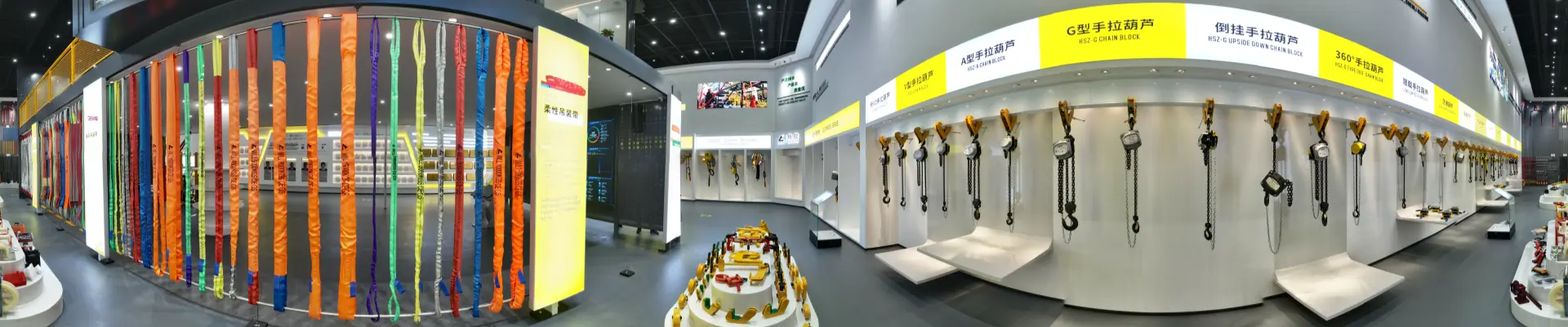
Lever Hoist Manufacturer for Industrial Lifting and Load Positioning
Lever hoists, also known as ratchet lever hoists, are portable manual lifting tools designed for lifting, pulling, tensioning and positioning heavy loads. Operated by a ratchet handle, these tools provide controlled load movement for industrial installation, maintenance, construction and rigging applications.
LDR offers HSH-X, HSH-A and HSH-V lever hoist series to meet different lifting and pulling requirements. Buyers can compare rated capacity, lift height, load chain specifications, operating mechanisms and structural features to identify a suitable configuration for their applications.
- Mechanical Core: A dual-pawl braking system and 360° rotating handle support controlled operation in confined working spaces.
- Free-Chain Mechanism: The quick-load freewheeling system allows operators to adjust load chain length when the hoist is unloaded.
- Rigid Construction: Heat-treated G80 load chains and drop-forged safety hooks provide the specified strength and deformation characteristics under overload conditions.
Contact LDR team to discuss lever hoist specifications, available configurations and factory-direct pricing for bulk orders.
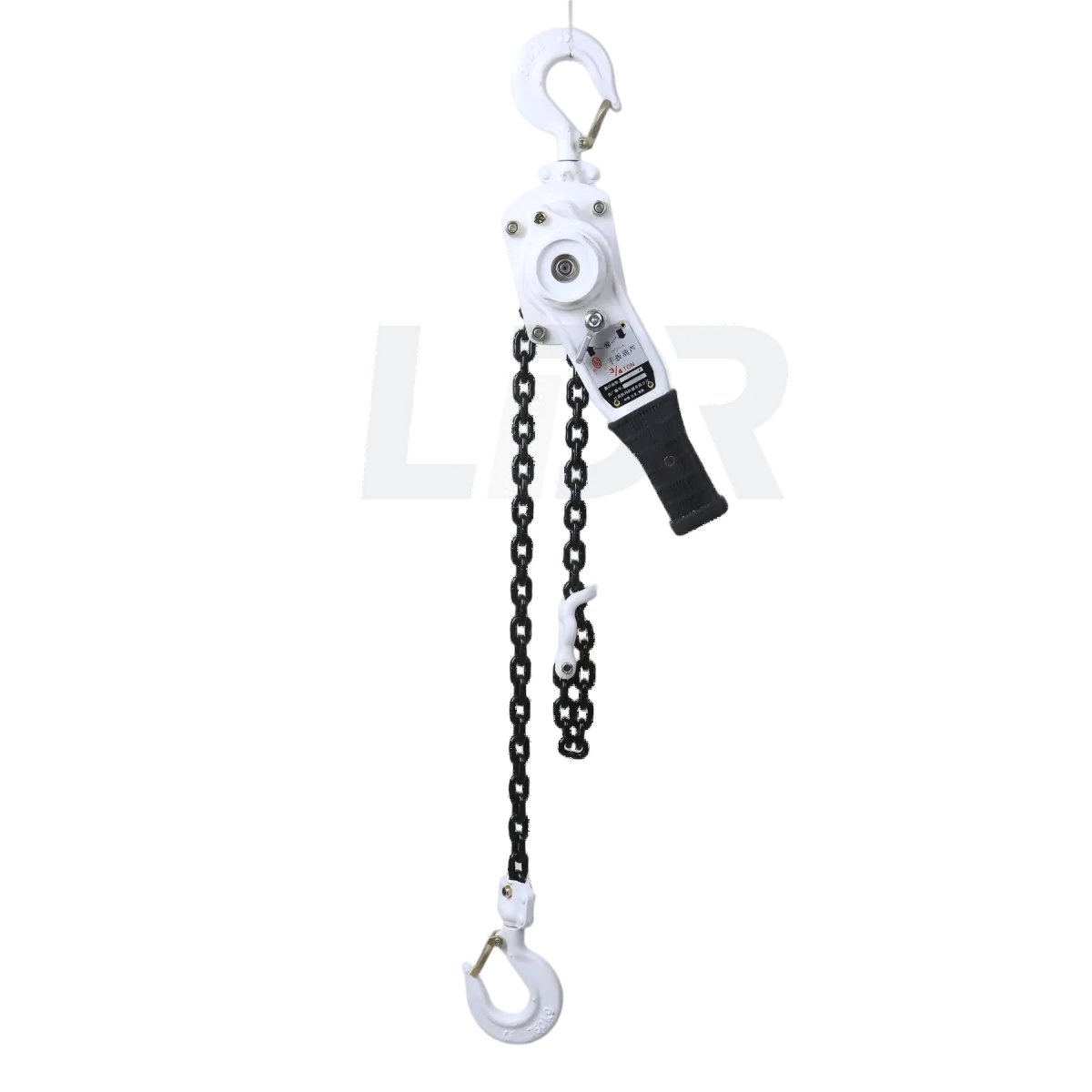
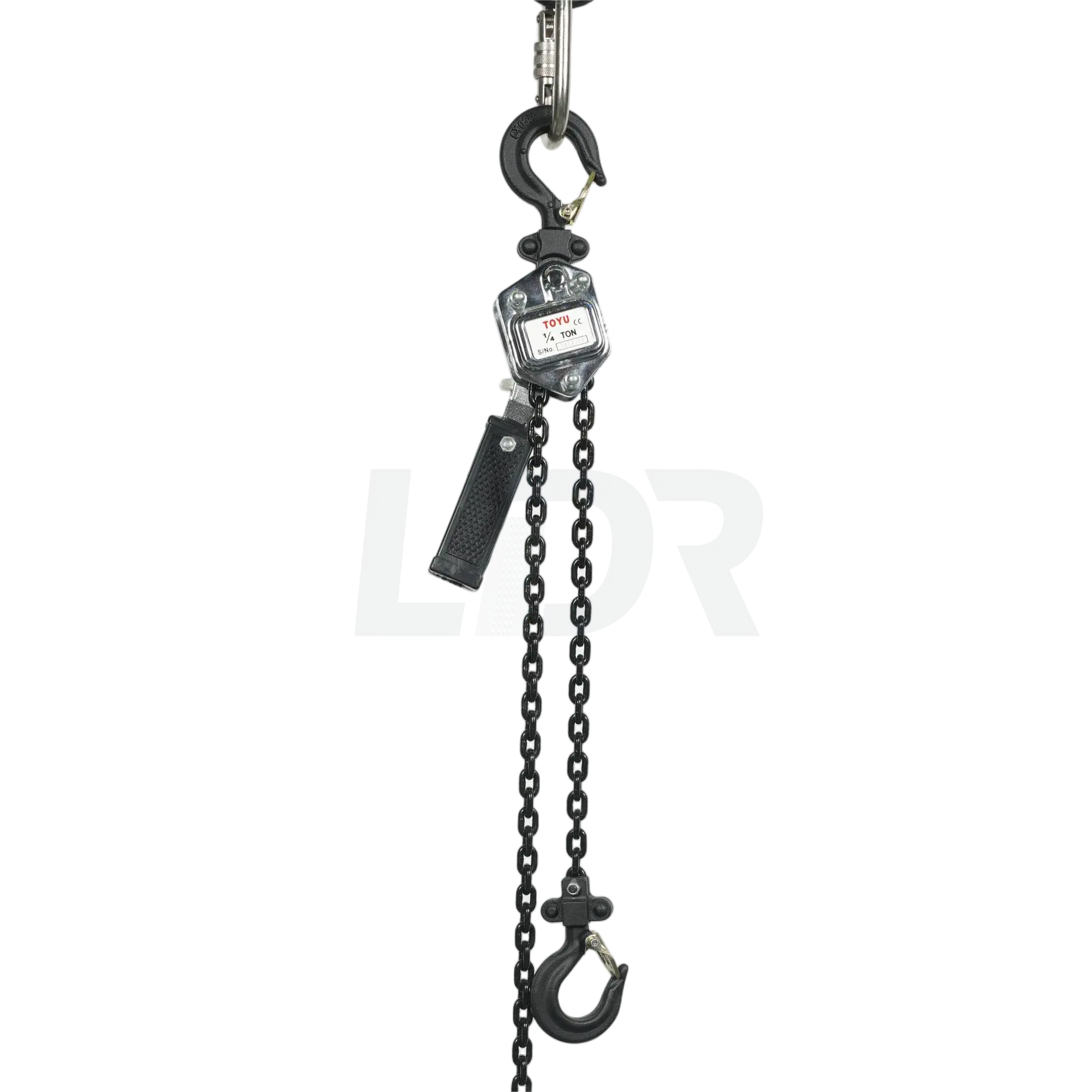
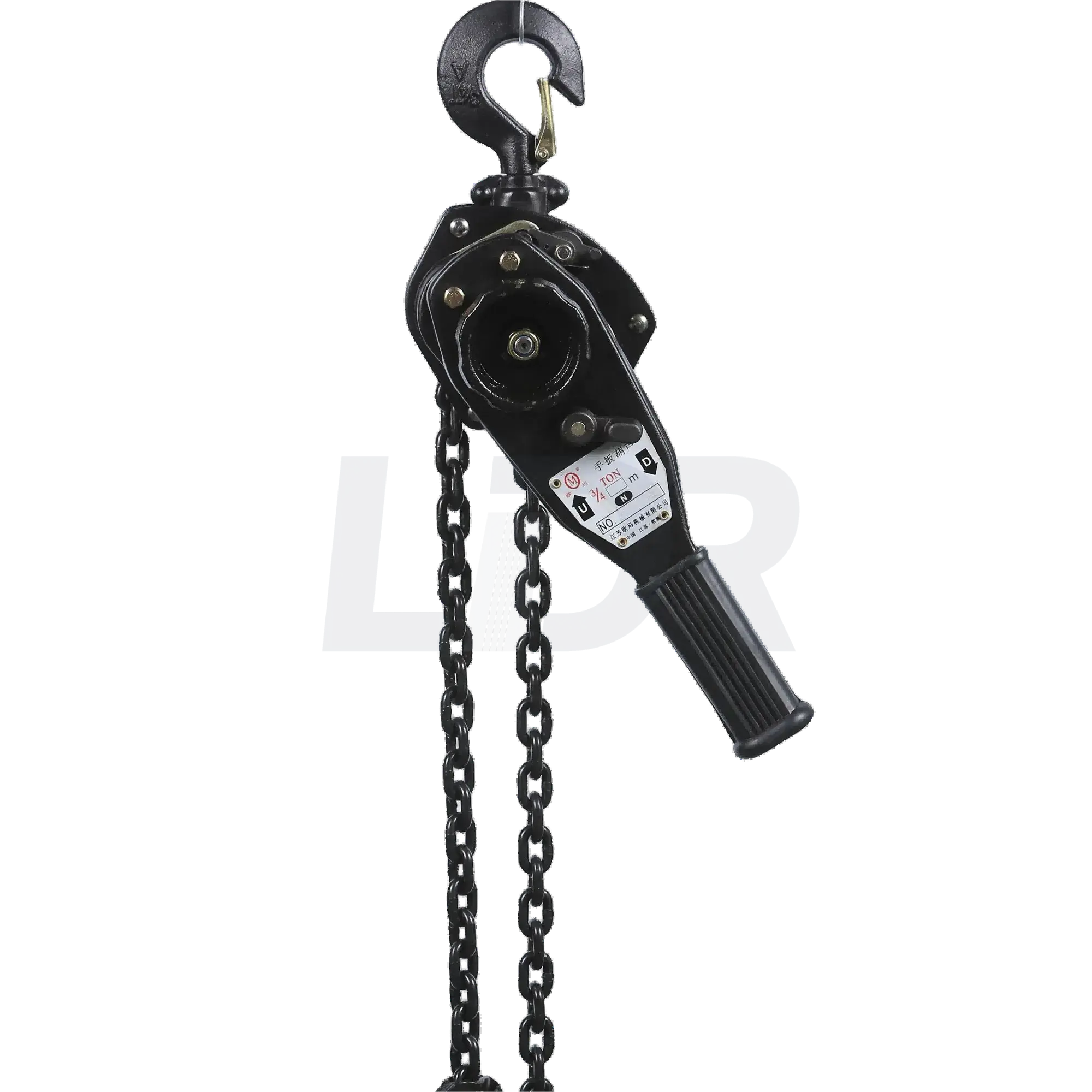
LDR supplies manual lever hoists for lifting, pulling, tensioning and positioning loads in industrial and material-handling applications. The HSH-V, HSH-A and HSH-X series feature different operating mechanisms and component designs, giving buyers practical distinctions to consider when selecting equipment for maintenance, installation and lifting tasks.
Although the three models serve similar applications, they are not mechanically identical. Their differences include how the unloaded chain is adjusted, how the handwheel and brake components are constructed, how the load sprocket is supported, and how the hooks and handles are designed. These features can influence setup procedures, maintenance considerations and suitability for particular load attachments.
For distributors and industrial purchasing teams, comparing these details helps establish a more precise equipment specification than choosing by rated capacity alone.
LDR HSH Lever Hoist Product Range
The HSH-V, HSH-A and HSH-X are the three models covered by this product page. Their published capacity ranges and standard lifts are summarized below.
| Model | Listed Capacity Range | Standard Lift | Principal Design Difference |
|---|---|---|---|
| HSH-V | 0.75–9 tonnes | 1.5 m | Unloaded chain can be adjusted by disengaging the gear mechanism; sliding-bearing arrangement described |
| HSH-A | 0.25–9 tonnes | 1 m for the 0.25-tonne model; 1.5 m for other listed capacities | Clutch-spring mechanism for free-chain adjustment; stamped handwheel |
| HSH-X | 0.25–9 tonnes | 1.5 m | Clutch-spring free-chain mechanism; enclosed precision-cast handwheel design and large-opening hook |
Available capacity options and standard lifts should be confirmed against the current specification for the exact model. Chain configuration, dimensions, product weight and any optional components should also be established before ordering.
HSH-V Lever Hoist: Gear-Disengagement Chain Adjustment
The HSH-V uses a triangular-style body and a precision-cast handwheel. Its principal operating distinction is the unloaded chain-adjustment mechanism: the product comparison describes the gear as being disengaged when the hoist is unloaded, allowing the chain to be pulled through quickly for setup.
The handwheel is a cast component described as having high strength. The changeover ratchet is forged, while the long-shaft gear and plate-gear components use high-strength steel with specified heat-treatment processes. The load sprocket is described as using high-strength ductile cast iron.
The HSH-V also uses a sliding-bearing arrangement in the described load-sprocket support, which the product comparison identifies as having slightly lower transmission efficiency than the integrated-bearing designs.
What this means for buyers
- Setup procedure: Gear disengagement provides a distinct method of adjusting the unloaded chain before the lifting task begins.
- Component construction: The cast handwheel and forged changeover ratchet are relevant when comparing the mechanical construction of the three models.
- Bearing arrangement: Buyers comparing transmission designs should consider the sliding-bearing configuration alongside the integrated-bearing arrangement used by A and X.
- Hook compatibility: The V model uses a fishhook-style hook. Buyers should confirm the opening and attachment geometry against the load or connected equipment.
The HSH-V is worth considering when its chain-adjustment method, component arrangement and available capacity fit the intended lifting or pulling task.
Product details: HSH-V Lever Hoist
HSH-A Lever Hoist: Clutch-Spring Adjustment Mechanism
The HSH-A differs from the HSH-V in both its chain-adjustment mechanism and several component designs. The product comparison states that the gears cannot be disengaged in the same way as the V model. Instead, a clutch spring raises the brake mechanism to permit free chain movement under the specified unloaded adjustment conditions.
The HSH-A uses a stamped handwheel rather than the precision-cast handwheel described for V and X. Its brake assembly includes the brake seat, friction plate and ratchet, with a traditional threaded connection between the brake seat and long shaft. The load sprocket is described as using an integrated bearing in the relevant A configuration.
The long-shaft gear and plate-gear components use high-strength steel and specified heat-treatment processes. The handle uses an A-style design with fixed corners, which the comparison describes as having lower strength than the reinforced V- and X-style handles.
What this means for buyers
- Chain adjustment: The free-chain mechanism operates differently from the gear-disengagement method used by HSH-V. Operators should follow the specific procedure for the selected model.
- Handwheel construction: The stamped handwheel is a clear component-level distinction from the cast designs used by V and X.
- Bearing arrangement: The integrated-bearing configuration is intended to improve transmission efficiency compared with the sliding-bearing arrangement described for V.
- Handle design: The handle structure is relevant when comparing mechanical construction. Buyers should use the manufacturer's rated capacity and operating instructions rather than infer allowable load from handle appearance.
- Optional protection: A load limiter is listed as an available option for the HSH-A. Availability and configuration should be confirmed during quotation.
The HSH-A should be evaluated by its adjustment mechanism, bearing configuration, handle design and the required product options, as well as its rated capacity.
Product details: HSH-A Lever Hoist
HSH-X Lever Hoist: Enclosed Design and Large-Opening Hook
The HSH-X shares the clutch-spring free-chain adjustment principle described for HSH-A, but its external design and several components differ. The product comparison describes the X model as using an enclosed precision-cast handwheel structure, with higher strength than the stamped handwheel used by A.
The HSH-X uses an integrated-bearing arrangement at the load sprocket. Its handle has an X-style design with reinforcing ribs. The product comparison also distinguishes the X model by its large-opening hook, which is intended to accommodate thicker objects than the fishhook-style design used by V and A.
The changeover ratchet is forged. The long-shaft gear and plate-gear components use high-strength steel with specified heat-treatment processes, while the load sprocket is described as using high-strength ductile cast iron.
What this means for buyers
- Chain adjustment: The clutch-spring mechanism provides a free-chain adjustment method similar in principle to A, but operators should follow the instructions for the actual model.
- Handwheel design: The enclosed precision-cast structure distinguishes X from the stamped handwheel of A.
- Bearing arrangement: The integrated-bearing configuration is intended to improve transmission efficiency compared with the sliding-bearing arrangement described for V.
- Hook opening: The larger opening may be relevant when the connection point or object being handled is thicker. Buyers should verify the actual hook dimensions and permitted loading arrangement.
- Handle construction: The reinforced X-style handle is a structural difference from the A-style handle.
- Optional protection: A load limiter is listed as an available option for HSH-X, subject to configuration confirmation.
For buyers comparing HSH-A and HSH-X, the key distinctions are the handwheel construction, hook opening and handle design, rather than assuming that the models differ only in appearance.
Product details: HSH-X Lever Hoist
HSH-V vs. HSH-A vs. HSH-X: Detailed Model Comparison
The following table consolidates the model differences described in the product comparison. It is intended to help buyers identify which specifications and options need to be considered before requesting a quotation.
| Component or Feature | HSH-V | HSH-A | HSH-X |
|---|---|---|---|
| Unloaded chain adjustment | Gear disengagement permits rapid chain pulling when unloaded | Clutch spring raises the brake mechanism to allow free chain movement under the prescribed conditions | Clutch-spring mechanism allows free chain movement under the prescribed conditions |
| Handwheel | Precision-cast component | Stamped component | Enclosed precision-cast structure |
| Changeover ratchet | Forged component | Forged component | Forged component |
| Brake assembly | Described with ratchet and friction components | Brake seat, friction plate and ratchet | Brake seat, friction plate and ratchet |
| Brake-seat connection | Refer to model specification | Traditional threaded connection | Traditional threaded connection |
| Long-shaft gear | High-strength alloy steel with heat treatment | High-strength alloy steel with heat treatment | High-strength alloy steel with heat treatment |
| Plate-gear assembly | High-strength steel components with heat treatment | High-strength steel components with heat treatment | High-strength steel components with heat treatment |
| Load sprocket | High-strength ductile cast iron | High-strength ductile cast iron | High-strength ductile cast iron |
| Load-sprocket bearing | Sliding bearing | Integrated bearing | Integrated bearing |
| Chain guidance | Confirm the exact model configuration | Guide plate described | Guide plate described |
| Outer wall plate | Thick steel plate formed by drawing | Thick steel plate formed by drawing | Thick steel plate formed by drawing |
| Main hook | 20Cr alloy-steel hook; fishhook-style shape | 20Cr alloy-steel hook; fishhook-style shape | 20Cr alloy-steel hook with a larger opening |
| Hook latch plate and frame | Stamped components | Stamped components | Cast-steel latch plate and stamped hook frame |
| Pull ring | V-style wire pull ring; lower strength than the A-style version in the comparison | A-style wire pull ring; slightly higher strength than V | Reinforced V-style stamped pull ring |
| Handle | Reinforcing ribs; high-strength design | A-style handle with fixed corners | Reinforcing ribs; high-strength design |
| Optional load limiter | Not listed as an option in the comparison | Available as an option | Available as an option |
| Optional cast-steel trapezoidal ring | Listed as an option | Listed as an option | Listed as an option |
| Optional adjustable chain-end ring | Listed as an option | Listed as an option | Listed as an option |
| Optional bearing-equipped lower hook | Listed as an option | Listed as an option | Listed as an option |
The comparison identifies several differences that are especially relevant to purchasing decisions: the method of unloaded chain adjustment, the handwheel and bearing designs, the hook opening, the handle construction and the availability of a load limiter.
The exact specification for the selected capacity remains important. Buyers should confirm dimensions, chain configuration, weight, hook opening and accessory availability before finalizing an order.
Why the Chain-Adjustment Mechanism Matters
Chain adjustment is one of the clearest operational differences among the three HSH models.
The HSH-V uses a gear-disengagement method when the hoist is unloaded. The HSH-A and HSH-X use a clutch-spring mechanism to permit free chain movement under the prescribed conditions.
These mechanisms serve a similar setup purpose but do not operate in exactly the same way. Buyers should consider the required operating procedure and ensure that operators understand the selected model's instructions.
When comparing products, ask for the operating manual and confirm the conditions under which free-chain adjustment is permitted. The mechanism must not be used under conditions prohibited by the manufacturer.
Why Bearing and Transmission Design Matter
The product comparison describes the HSH-V as using a sliding-bearing arrangement, while HSH-A and HSH-X use an integrated-bearing arrangement. The comparison associates the integrated-bearing design with higher transmission efficiency.
The long-shaft gear, plate-gear components and spline gears are described as using high-strength steel and heat-treatment processes. These components form part of the transmission system and should be considered alongside the product's rated capacity and intended use.
For purchasing teams, the practical comparison is whether the component configuration fits the expected duty and maintenance requirements. Efficiency descriptions should not be interpreted as a quantified performance guarantee unless comparative test data is available.
Hook and Attachment Options
The PDF identifies meaningful differences in hook design. The HSH-V and HSH-A use a 20Cr alloy-steel hook in a fishhook-style shape. The HSH-X uses a larger-opening hook designed to accommodate thicker objects. Its latch plate is described as cast steel, while the hook frame uses a stamping process.
The pull-ring construction also differs. V uses a wire pull ring described as having lower strength than the A-style version. A uses an A-style wire pull ring, while X uses a stamped and folded V-style pull ring described as having higher strength.
The cast-steel trapezoidal ring is listed as an optional component across the three models. An adjustable chain-end ring is also listed as an option and is described as providing an additional protective function. A bearing-equipped lower hook can be specified as an option.
Buyers should confirm the actual hook dimensions, accessory availability and approved loading arrangement for the selected model. The hook opening must suit the intended connection point without compromising the manufacturer's requirements.
Optional Load Limiters and Accessories
The product comparison lists optional load-limit components for HSH-A and HSH-X. These configurations include a load-limiting brake assembly and related shaft and handwheel components.
The comparison describes the relevant brake-seat connection as using a spline connection for the optional limit-load arrangement, which is intended to simplify installation and maintenance. The limit-load handwheel is a precision-cast component, and a nameplate can be placed inside the handwheel assembly.
These options should be confirmed by model and capacity during quotation. Buyers should request the relevant specification and operating instructions rather than assuming that a load limiter is included as standard.
A limit-load device does not replace the need to select the correct rated capacity, inspect the equipment or follow the manufacturer's operating instructions.
How to Choose the Right Lever Hoist
Select by Rated Capacity and Lift Height
Start with the required load, lifting height and operating arrangement. Then confirm the rated capacity, standard lift, chain configuration, hook dimensions and product weight for the selected model.
The HSH-X, HSH-A and HSH-V have different listed capacity ranges and standard lifts. These values should be checked against the current product specifications before ordering.
Compare Chain-Adjustment Requirements
If unloaded chain adjustment is an important part of the setup process, compare the operating mechanisms directly. HSH-V uses gear disengagement, while HSH-A and HSH-X use a clutch-spring mechanism.
The correct choice depends on the product configuration and the prescribed operating procedure. Operators should be trained to use the mechanism only under the conditions specified by the manufacturer.
Match the Hook to the Attachment Point
The larger-opening hook described for HSH-X may be relevant when the attachment point or connected object has a thicker cross-section. V and A use the fishhook-style hook described in the product comparison.
Buyers should compare the actual hook opening, throat dimensions and approved loading arrangement rather than relying on the model name alone.
Consider Optional Protection and Accessories
HSH-A and HSH-X are listed with optional load limiters. The product comparison also lists optional trapezoidal rings, adjustable chain-end rings and bearing-equipped lower hooks.
Identify which options are required for the application and confirm their availability for the chosen capacity. Accessories should be included in the purchase specification so that the supplied configuration matches the project requirements.
Lever Hoist vs. Manual Chain Hoist
Lever hoists and manual chain hoists use different operating mechanisms. Lever hoists can be used for lifting, pulling, tensioning and positioning where the selected model is approved for the task. Manual chain hoists are commonly selected for vertical lifting of suspended loads.
The choice depends on the required movement, operating clearance, rated capacity, chain configuration and installation conditions. Buyers should compare the approved use and operating instructions of each equipment type before deciding.
For applications requiring hand-chain-operated lifting, see the LDR manual chain hoist range.
Product Quality, Testing and Documentation
Industrial buyers should review the current model specification, operating manual and applicable inspection documentation when evaluating a lever hoist. Any project-specific requirements for testing records or compliance documents should be identified before ordering.
Product construction, testing procedures and available documentation should be confirmed for the exact model and capacity. Buyers should not rely on general product descriptions as a substitute for the relevant technical documents.
OEM, ODM and Customization
For distribution and project procurement, buyers should specify the required model, rated capacity, lift height, chain configuration, quantity, destination market and documentation requirements.
Branding, labels, packaging and other options can be discussed where available. Optional load limiters and attachment accessories should be identified in the quotation so that the supplied configuration matches the purchase specification.
Any non-standard configuration should be reviewed for technical feasibility before an order is confirmed.
Frequently Asked Questions
What is the main difference between HSH-V, HSH-A and HSH-X?
The main differences include the unloaded chain-adjustment mechanism, handwheel construction, bearing arrangement, hook opening and handle design. HSH-V uses gear disengagement for unloaded chain adjustment, while HSH-A and HSH-X use a clutch-spring mechanism. HSH-X also has a larger-opening hook and an enclosed precision-cast handwheel design.
Which model has a cast handwheel?
The product comparison describes HSH-V as using a precision-cast handwheel and HSH-X as using an enclosed precision-cast handwheel structure. HSH-A uses a stamped handwheel.
Why does the bearing arrangement matter?
The product comparison describes a sliding-bearing arrangement for HSH-V and an integrated-bearing arrangement for HSH-A and HSH-X. The integrated-bearing configuration is associated with higher transmission efficiency in the comparison. Buyers should consider this difference alongside capacity, operating conditions and maintenance requirements.
Which model has a larger-opening hook?
HSH-X is described with a larger-opening hook intended to accommodate thicker objects. Buyers should confirm the actual hook dimensions and permitted loading arrangement before selecting the model.
Are load limiters available?
The product comparison lists optional load limiters for HSH-A and HSH-X. Buyers should confirm availability and the applicable configuration for the selected capacity.
What information should I provide for a quotation?
Provide the rated capacity, required lift height, intended application, chain configuration, expected quantity and destination market. Include any requirements for hook dimensions, optional load limiters, attachment accessories or documentation.