

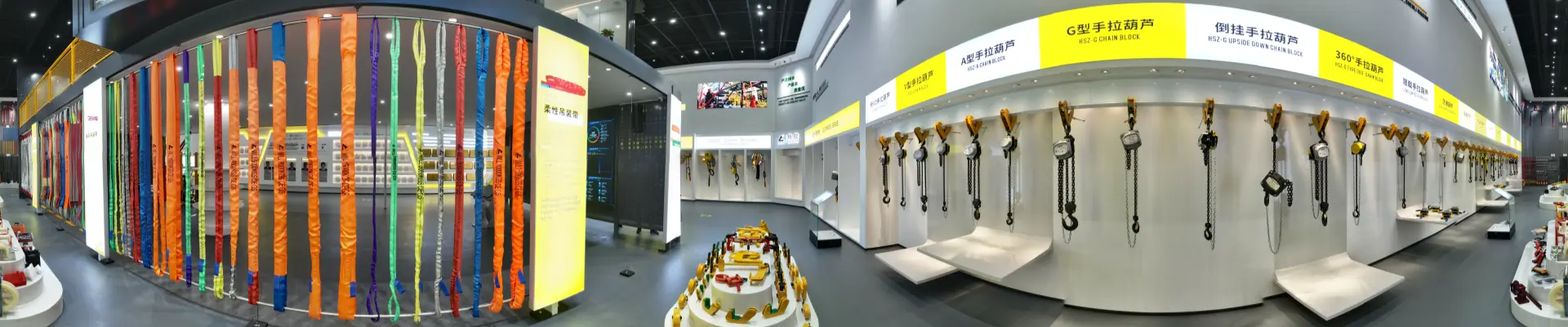
Electric Chain Hoist
Electric Chain Hoists are efficient lifting devices designed for lifting and moving loads using an electric motor and high-strength load chain. These hoists offer smooth lifting operation, compact design, and reliable performance for various industrial applications.
-
Dynamic Braking Architecture: Features a heavy-duty DC electromagnetic disk brake operating in tandem with a mechanical regenerative braking framework to ensure immediate holding torque under full load.
-
Power & Duty Cycle Performance: Driven by a Class F insulated, continuous-rated squirrel cage motor (M4/S1 duty cycle) housed in an extruded aluminum cooling fin chassis for maximum thermal dissipation.
-
Precision Drive Chain: Utilizing high-precision, case-hardened FEC G80 alloy load chains matched to a CNC-machined pocket wheel sheave to eliminate chordal action and premature chain wear.
Optimize your heavy assembly uptime—contact our industrial rigging desk today for custom electric chain hoist specifications!
-
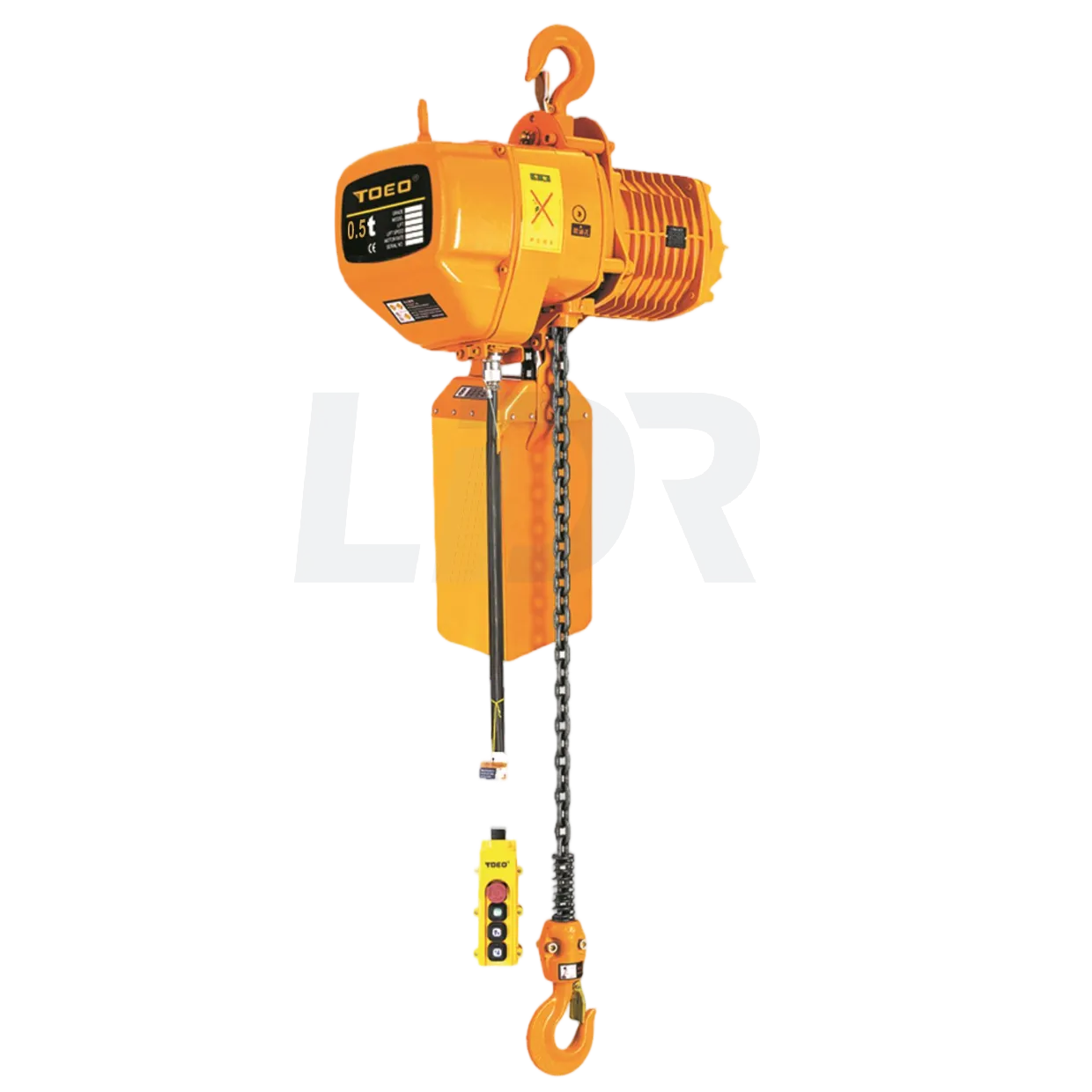
Electric Hoist 0.5T-5T Hook Type
-
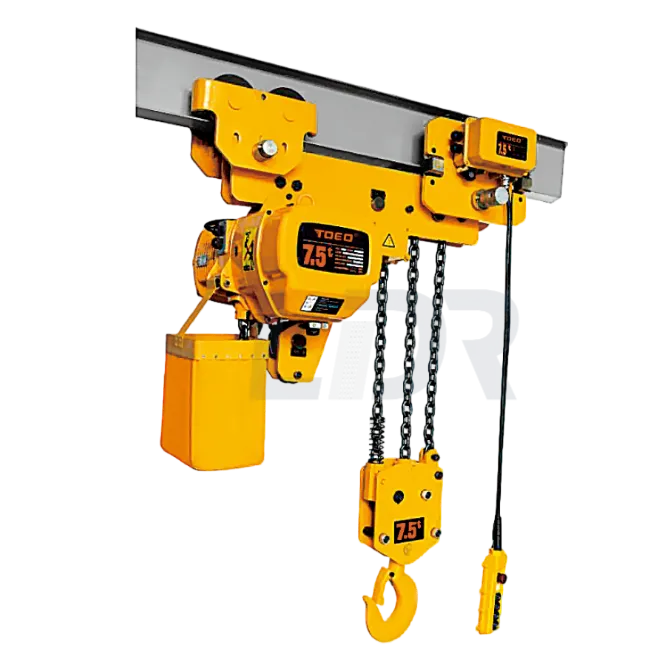
Single Speed Type 7.5t -Electric Trolley Running Type
-
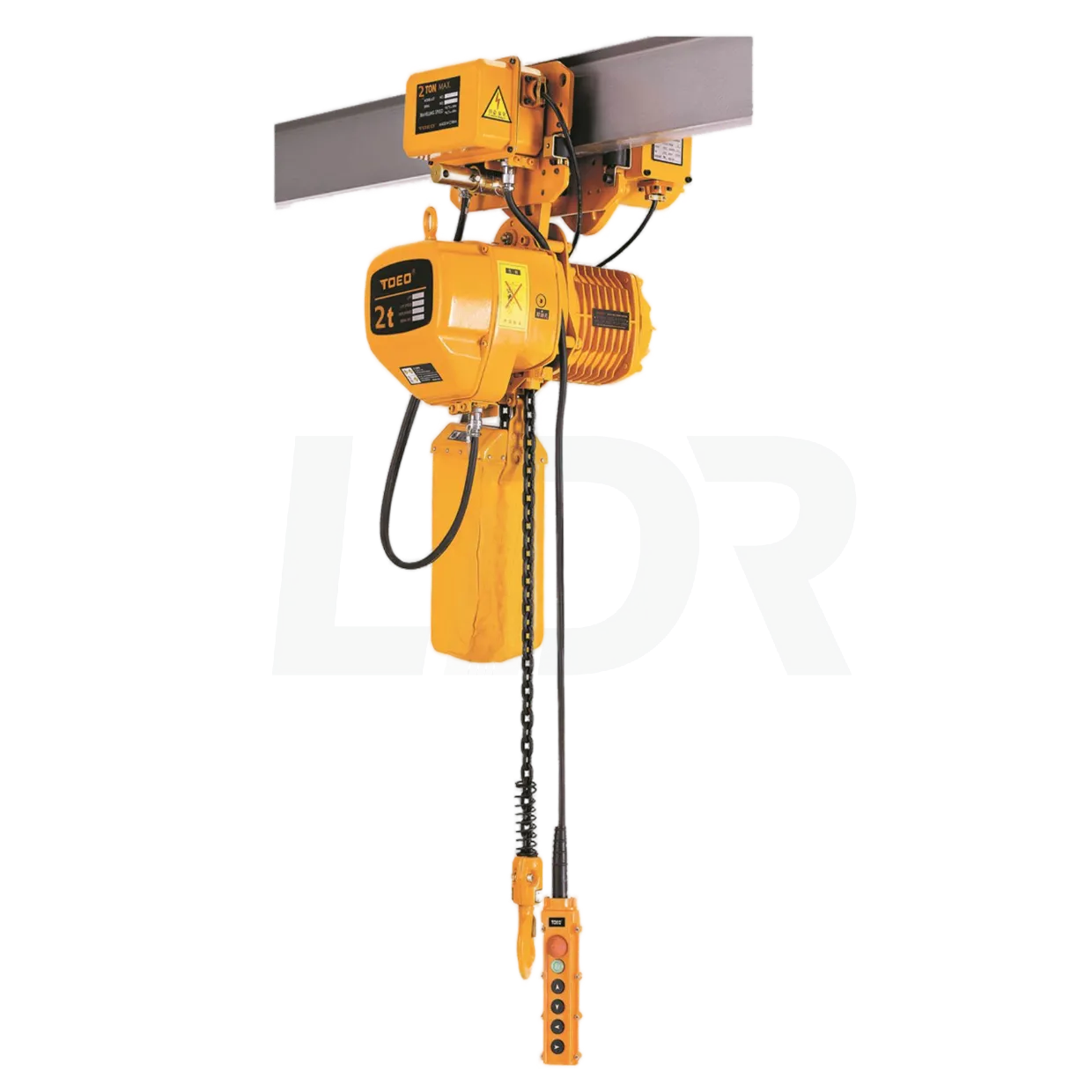
Electric Hoists 0.5t-5t Manual Trolley Running Single Speed Type
-
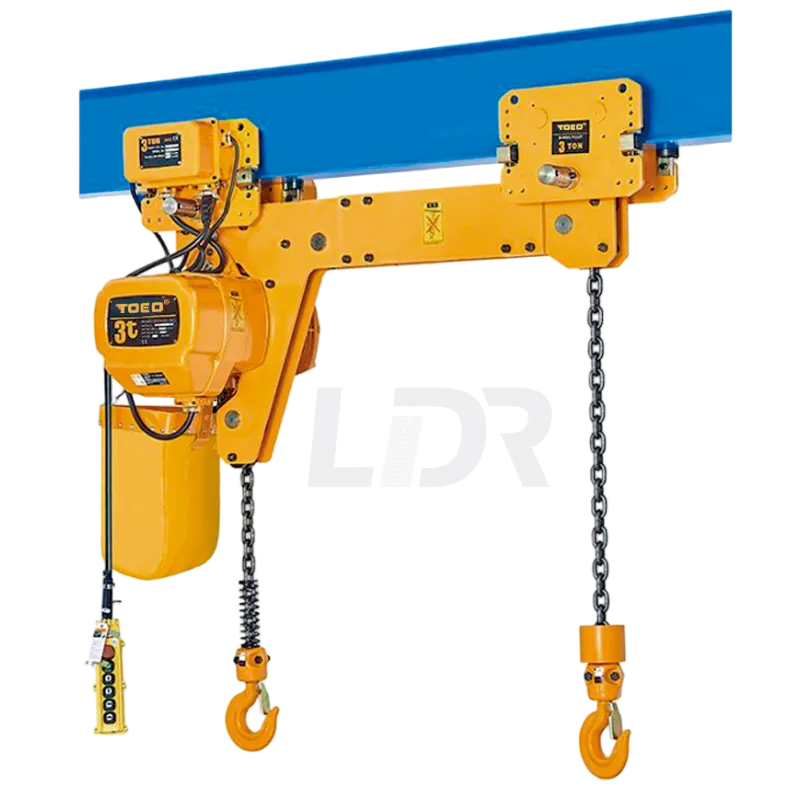
Electric Chain Hoist Twin Hook Type 0.5-5T
-
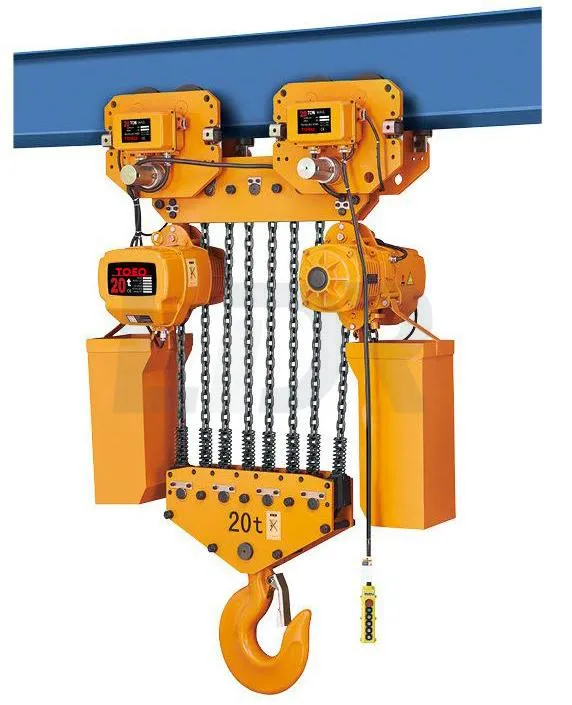
Electric Chain Hoist 20T -Electric Trolley Running Type
-
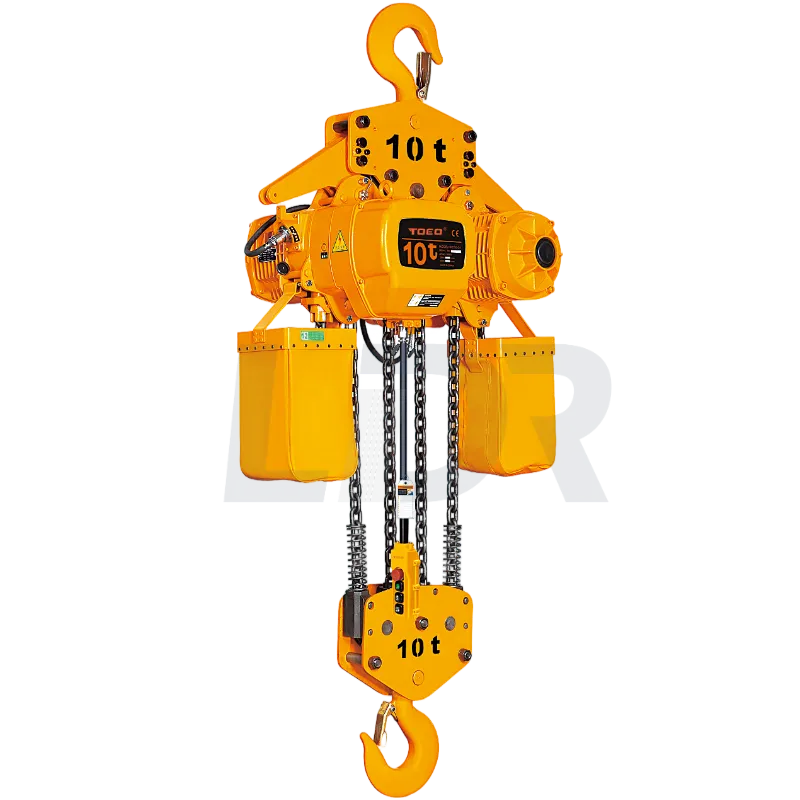
Electric Chain Hoists 10T-Hook Type
-
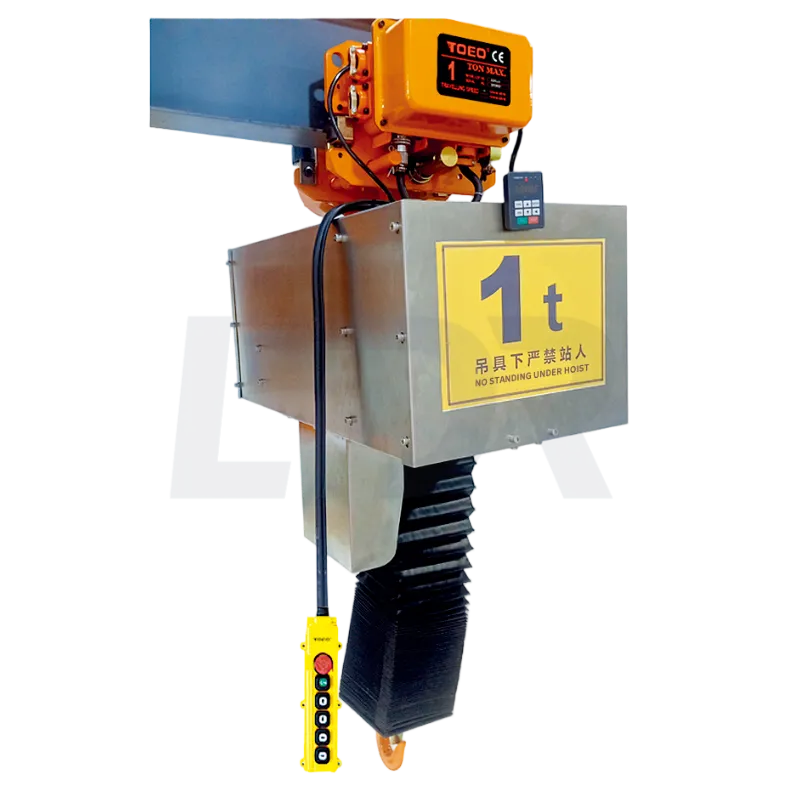
Electric Chain Hoist Clean Type 0.5-5T
-
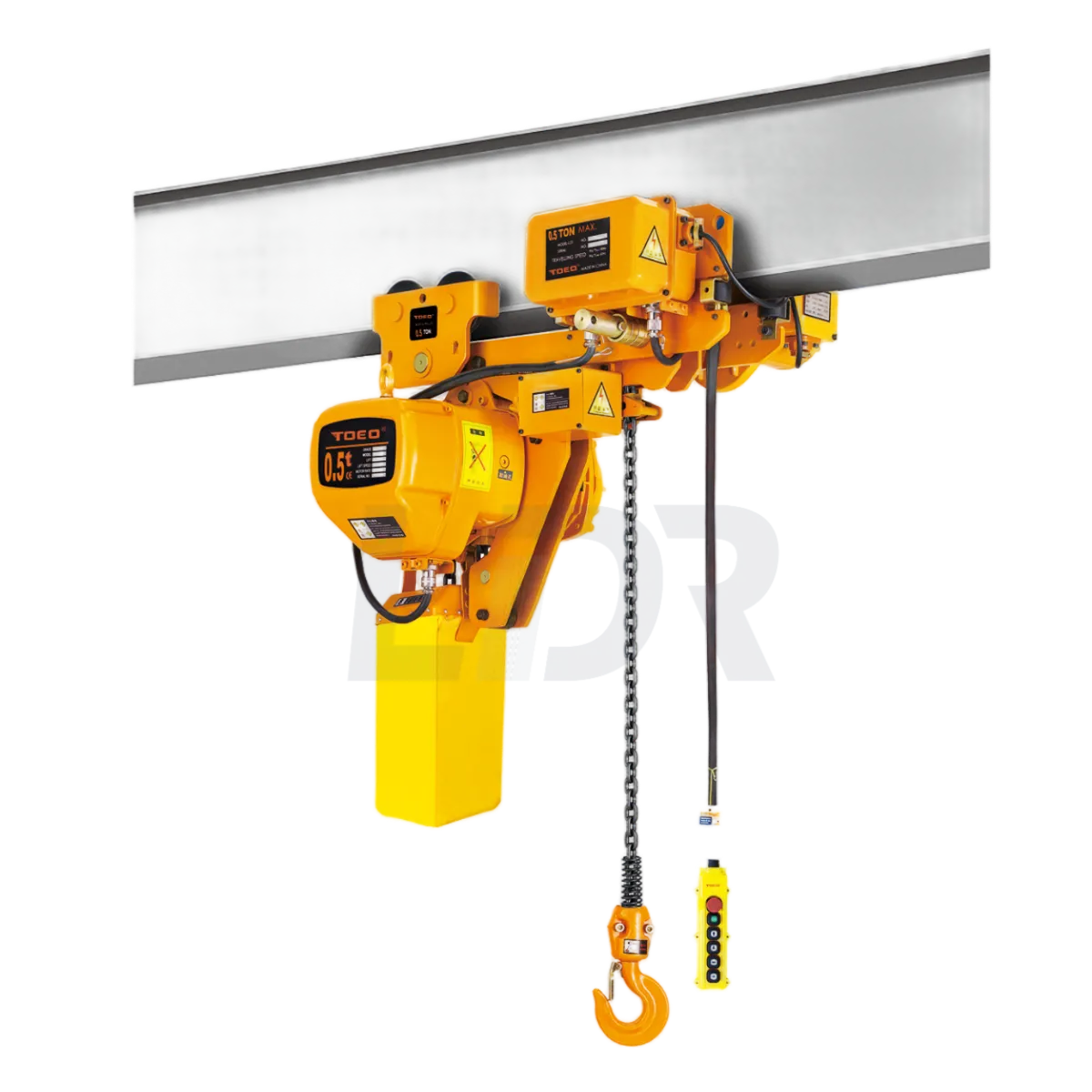
Super-low Head Room Electric Chain Hoist
-
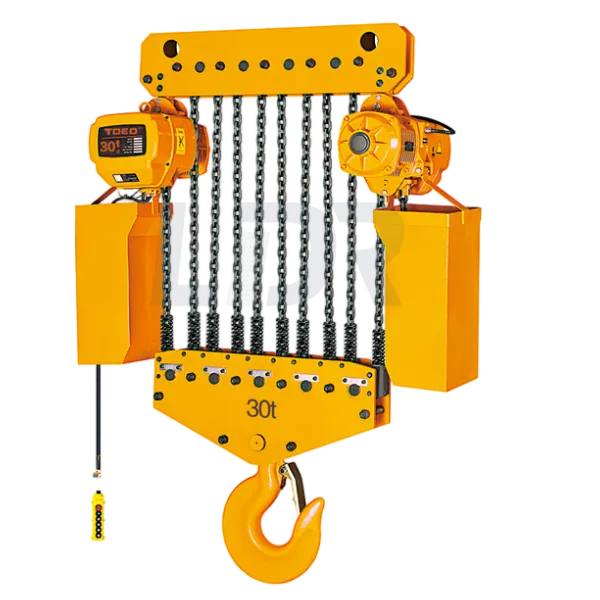
Single Speed Electric chain hoists type 30t-Stationary
Electric chain hoists are known for their compact structure, easy installation, and efficient lifting performance. Compared with wire rope hoists, electric chain hoists are lighter and more suitable for medium-duty lifting tasks.
Component Deep-Dive
-
Heavy Duty Electric Chain Hoist Drivetrain:
The internal power transmission utilizes an oil-bath lubricated, multi-stage helical gear train made of chrome-manganese alloy steel (20CrMnTi). Every gear undergoes vacuum carbonitriding heat treatment to achieve a Rockwell hardness of HRC 58 - 62, drastically lowering mechanical back-lash and operating noise below 75dB.
-
Portable Electric Hoist & Controls Integration:
Engineered with a low-voltage (24V control transformer) pendant or optional 2.4GHz wireless telemetry controller to mitigate operator shock hazards. The compact, modular structural layout allows for rapid interchangeability between fixed suspension lugs, plain push trolleys, or low-headroom motorized crane configurations.
Engineering Matrix
| Rated Load Metric | Mechanical Designation | Lifting Speed (60Hz) | Motor Duty Rating | Chain Dimension & Falls | Short-Circuit Braking Torque |
| 1.0 Ton / 2200 lbs | 1 ton electric chain hoist | 7.9 m/min | 1.5 kW/40%ED | Ф7.1 x 2lmm (1 Fall) | > 200% of Rated Motor Torque |
| 2.0 Ton / 4400 lbs | 2 ton electric chain hoist | 3.9 m/min | 1.5 kW/40%ED | Ф7.1 x 2lmm (2 Falls) | > 200% of Rated Motor Torque |
| 3.0 - 5.0 Ton Spec | Dual-Speed Production Unit | 5.4 / 1.8 m/min | 3.0kW/30%ED | Ф11.2 x 34mm (2 Falls) | Heavy-Duty Multi-Disk Array |
| 10 - 25 Ton Heavy | Multi-Fall Synchronized Block | 1.3 m/min | 3.0 kWx2 | Heavy Gauge | Dual Independent Systems |
Automated Industrial Applications
Our specialized electric chain fall hoist lines are integrated into advanced manufacturing work cells requiring continuous vertical velocity and high duty cycles:
-
Precision Aerospace & Automotive Assembly: Used for precise, variable-speed "inching" maneuvers during automated engine drops and fuselage mating sequences where jerky movements cause structural damage.
-
Heavy Foundry & Chemical Processing: Operating within environments containing airborne particulates and chemical scrubbing agents, where our IP55 enclosures protect critical electrical contactors.
-
Precision CNC Tooling Centers: Loading raw multi-ton alloy billets into milling spindles with zero drift, ensuring zero mechanical collision with expensive tooling beds.
LDR Electric Chain Hoist: Technical Selection Matrix
To streamline your procurement and specification matching, our 0.5T to 35T electric chain hoist inventory is categorized into 4 core engineering application profiles below.
1. Stationary & Hook Type Configurations
Applicable Models:
-
0.5T-5T Hook Type (Standard Maintenance & Assembly)
-
10T Hook Type (Heavy-Duty Variable Rigging)
-
30T Stationary Type & 35T Single Type (Ultra-Heavy Industrial Baselines)
| Engineering Evaluation Factors | Technical Sizing & Selection Guidance |
| Core Operational Conditions | Engineered for fixed-point hoisting, center-line vertical lifting on fixed gantry frames, or upgrading existing manual/motorized trolleys in legacy factory bays. |
| Mechanical Design Thresholds | * 0.5T to 10T Range: Selection depends strictly on the chain fall configuration. For 0.5T–2T, prioritize a single-fall system to achieve higher vertical velocities ($\approx 6\text{–}8\text{ m/min}$). For 10T units, multi-fall arrangements (e.g., 4 falls) are mandatory to distribute static shear loads across the pocket wheel sheave, trading speed for a higher safety factor. * 30T to 35T Ultra-Heavy Loads: Reserved for extreme foundry, heavy forging, and die-casting operations. These capacities demand a dual independent braking system (dual-disk array) and an oil-bath helical gear train. Given the massive dead weight of the hoist, the supporting structural steel beams must undergo rigorous bending moment verification. |
2. Trolley Running Type Configurations
Applicable Models:
-
0.5T-5T Manual Trolley Running Type (Push/Geared Monorail Interfacing)
-
7.5T Electric Trolley Running Type (Medium-Capacity Motorized Travel)
-
20T Electric Trolley Running Type (Heavy-Duty Automated Track Tracking)
| Engineering Evaluation Factors | Technical Sizing & Selection Guidance |
| Core Operational Conditions | Ideal for work cells requiring horizontal material transfer along I-Beams or H-Beams (e.g., automotive machining bays, CNC workstation feeding, and structural assembly lines). |
| Mechanical Design Thresholds | * Manual Trolley Options: Only recommended for capacities $\le 5\text{T}$, short travel distances (<3 meters), and low-frequency duty cycles. Operators manually push the payload to create lateral displacement, which minimizes electrical infrastructure budgets. * Electric Trolley Options: For loads ranging from $7.5\text{T}$ to $20\text{T}$, motorized travel is mandatory. Procurement officers must provide the precise Beam Flange Width to our engineering desk during RFQ so wheel spacing can be factory-calibrated. 20T heavy-duty trolleys feature dual side guide rollers to prevent tracking skew and rail binding. |
3. Confined Space & Balanced Lift Configurations
Applicable Models:
-
Super Low Headroom Electric Chain Hoist (Ultra-Low Clearance Bays)
-
Twin Hook Type 0.5-5T (Synchronized Dual-Point Lifters)
| Engineering Evaluation Factors | Technical Sizing & Selection Guidance |
| Core Operational Conditions | Specialized rigging solutions engineered for low overhead building constraints or applications demanding precise load equilibrium during hoisting. |
| Mechanical Design Thresholds | * Super Low Headroom Type: Specify this layout when the vertical distance from the overhead beam to the workshop floor is restricted, yet you require the maximum effective lift height. By positioning the hoist chassis parallel to the motorized trolley frame, the hook-to-beam headroom dimension is compressed by $30\%\text{ to } 50\%$ compared to standard designs. * Twin Hook Type: Engineered specifically for long-axis payloads (e.g., steel piping bundles, industrial rollers, textile webbing rolls, and wide plates). Both hooks are driven by a single motor core through a rigid mechanical shaft, guaranteeing $100\%$ synchronized lifting speed to eliminate structural tilting, load slippage, or dangerous shifts in the center of gravity. |
4. Precision Controlled & Contamination-Free Environments
Applicable Models:
-
Cleanroom Type 0.5-5T (Cleanroom Certified Motorized Blocks)
| Engineering Evaluation Factors | Technical Sizing & Selection Guidance |
| Core Operational Conditions | Designed for semiconductor fabrication facilities, pharmaceutical packaging bays, precision electronics assembly, medical device manufacturing, and high-grade food processing plants. |
| Mechanical Design Thresholds | * Standard hoists release microscopic particulate matter via chain friction, gear oil misting, and motor carbon shedding. * Cleanroom Selection Metrics: Procurement tenders must specify the required target class (e.g., ISO Class 5 / Class 6 compliance). These models utilize case-hardened stainless steel or nickel-plated load chains, non-volatile food-grade lubricants, non-shedding fan shrouds, and an integrated dust-collection bucket suspended beneath the chain guide to guarantee zero airborne contamination. |
B2B Procurement Engineering Checklist
Before submitting your formal Request for Quote (RFQ) to the LDR engineering desk, please cross-verify the following electrical and mechanical boundary parameters within your project blueprints:
-
Electrical Grid Configuration:
Our standard manufacturing baseline is 380V/50Hz/3-Phase. For international facilities, please specify if your grid requires 460V/60Hz (North America), 415V/50Hz(UK/Middle East), or single-phase residential voltages for light industrial workshops to prevent magnetic contactor failure.
-
Duty Cycle / ED Rating:
Evaluate the continuous uptime of your workstation. For intermittent assembly positioning, a 25% ED rating is sufficient. For high-volume automotive assembly or automated conveyor feeding, specify a 40% to 60% ED rating equipped with a Class F insulated motor and forced cooling fin enclosures.
-
Hoisting Velocity (Single vs. Dual Speed):
While the listed models default to efficient Single Speed operations, applications involving fragile mold alignment, heavy machining center loading, or precise assembly mating should request VFD (Variable Frequency Drive) Dual Speed customization for smooth deceleration and zero-overshoot positioning.
Manufacturing Origin & OEM Integration
LDR is a tier-one manufacturing authority specializing in international-grade electric hoist for sale solutions. As a globally verified electric hoist supplier, our production facility features automated testing towers where every motorized lift block undergoes dynamic load cell tracking up to 125% of rated capacity. We handle complex B2B customized tenders, offering Variable Frequency Drives (VFD) for step-less speed adjustment, specialized anti-corrosive marine paint finishes, and private branding for heavy industrial distributors.
FAQ
What is an electric chain hoist used for?
Electric chain hoists are used for lifting and moving heavy loads in factories, warehouses, and construction sites.
How much weight can an electric chain hoist lift?
Electric chain hoists typically have lifting capacities ranging from 0.5 ton to 50 tons depending on the model.
What are the advantages of electric chain hoists?
Electric chain hoists offer compact design, smooth lifting operation, and reliable performance for frequent lifting tasks.