
How to Read a Lifting Sling Capacity Chart and Choose the Right Sling for Heavy Lifting?
August 5, 2026
A lifting sling capacity chart helps users select the correct sling based on load weight, sling type, lifting method, and working conditions. The chart shows the Working Load Limit (WLL), which represents the maximum weight a sling can safely handle under specific conditions. By checking the chart before lifting, operators and purchasing teams can avoid overload risks and choose suitable equipment for each application.
However, reading a capacity chart requires more than finding a number that matches the load weight. Factors including sling angle, hitch method, material type, and safety requirements can change the actual lifting capacity. For example, a two-leg sling system may support a different load depending on whether the sling angle is 60 degrees or 30 degrees.
For companies purchasing lifting equipment, understanding capacity charts improves safety and reduces unnecessary equipment costs. Instead of selecting oversized or unsuitable products, buyers can match the sling specification with the actual lifting requirement.
Professional suppliers provide detailed capacity information for different lifting slings, allowing customers to select products for construction, manufacturing, logistics, marine operations, and heavy industrial applications.
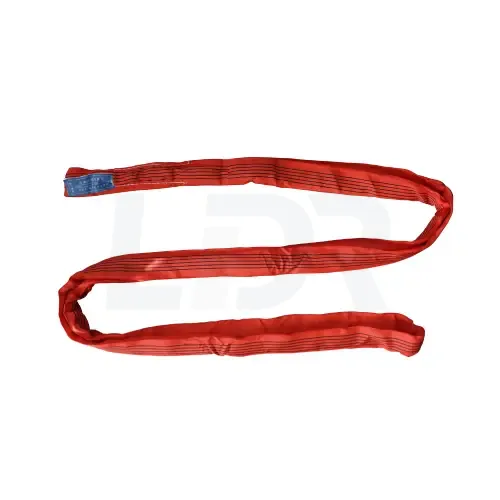
What Is a Lifting Sling Capacity Chart and Why Is It Important?
A lifting sling capacity chart is a technical reference that shows the safe lifting capacity of different sling products under various configurations. It is commonly used by engineers, safety managers, lifting professionals, and purchasing teams.
The main purpose of a capacity chart is to connect the sling design with the actual lifting condition.
A chart usually includes information about:
- Sling type
- Sling width or diameter
- Working Load Limit
- Length options
- Hitch configuration
- Safety factors
- Applicable standards
Before using any sling, operators should check the chart provided by the manufacturer. The rated capacity depends on how the sling is used, not only the physical strength of the material.
Understanding Working Load Limit and Breaking Strength
Working Load Limit is one of the most important values in a lifting sling capacity chart.
WLL refers to the maximum load a sling can safely lift during normal operation. It already considers the required safety factor.
Breaking strength represents the maximum force a sling can withstand before failure.
These two values are different.
For example:
A polyester sling may have a breaking strength of 50 tons. If the required safety factor is 5:1, the working load limit becomes:
50 tons ÷ 5 = 10 tons WLL
Users should always follow the WLL instead of the breaking strength when planning lifting operations.
Why Capacity Charts Matter for Industrial Applications
In industrial environments, lifting operations often involve expensive equipment and heavy materials.
Incorrect sling selection may cause:
- Equipment damage
- Load instability
- Production delays
- Safety incidents
- Higher replacement costs
A proper capacity chart allows companies to choose the correct product before the lifting process begins.
For example, a factory moving a 15-ton machine cannot simply choose a 15-ton sling. The company must consider lifting angles, connection methods, and whether the load distribution remains balanced.
A professional evaluation process helps users select suitable industrial lifting slings for their working conditions.
Table Caption: Basic Information Included in a Lifting Sling Capacity Chart
| Chart Information | Meaning | Why It Matters |
|---|---|---|
| Sling Type | Identifies round sling, webbing sling, or other designs | Determines application suitability |
| Working Load Limit | Maximum safe lifting capacity | Prevents overload situations |
| Sling Length | Distance between connection points | Affects lifting configuration |
| Hitch Type | Vertical, choker, or basket method | Changes capacity rating |
| Sling Angle | Angle between sling legs | Influences tension force |
| Safety Factor | Strength margin requirement | Ensures safe operation |
How to Read a Lifting Sling Capacity Chart Correctly?
Reading a capacity chart requires understanding several technical terms. Buyers should review each section carefully before selecting a product.
Check the Sling Type and Construction
The first step is identifying the correct sling category.
Common options include:
- Polyester round slings
- Webbing slings
- Wire rope slings
- Chain slings
Different designs provide different advantages.
For example, round slings offer flexibility and protect finished surfaces. Webbing slings provide a wider contact area and work well for many general lifting applications.
An EN1492-2 Round Sling follows European requirements for polyester round sling performance and is commonly selected for industrial lifting operations.
Understand Hitch Types
The same sling can have different capacity ratings depending on the hitch method.
The three common lifting methods are:
Vertical Hitch
A vertical hitch connects the sling directly between the lifting point and the load.
This method usually provides the highest efficiency because the sling supports the load directly.
Example:
A 5-ton sling used vertically has a WLL of 5 tons.
Choker Hitch
A choker hitch wraps around the load and creates a tighter connection.
However, the capacity decreases because the sling angle and contact method affect performance.
Users should always check the manufacturer’s chart before using this configuration.
Basket Hitch
A basket hitch supports the load from both sides of the sling.
This method can provide higher capacity than a single vertical lift, but load stability becomes more important.
The load must remain balanced during lifting.
Consider Sling Angle Factors
Sling angle is one of the most important factors in capacity calculation.
When sling legs become more horizontal, tension increases.
For example:
A two-leg sling lifting a 10-ton load at a 60-degree angle experiences lower tension than the same sling lifting the same load at a 30-degree angle.
The smaller angle creates higher force on each sling leg.
Table Caption: How Sling Angle Influences Lifting Capacity
| Sling Angle | Effect on Sling Tension | Recommended Consideration |
|---|---|---|
| 90 degrees | Lowest additional tension | Most efficient condition |
| 60 degrees | Moderate increase | Common industrial use |
| 45 degrees | Higher tension | Requires careful selection |
| 30 degrees | Significant increase | Requires higher capacity sling |
Understanding angle factors is essential when selecting heavy lift slings for complex lifting operations.
What Factors Affect the Capacity Rating of Lifting Slings?
A capacity chart provides important information, but users must also understand the factors that influence actual performance.
Sling Material and Design
The material directly affects sling strength, flexibility, and durability.
Common materials include:
- Polyester
- Nylon
- Steel wire
- Alloy chain
Polyester is widely used because it provides good strength, lightweight handling, and resistance to many industrial conditions.
For many general applications, polyester lifting slings provide a practical balance between performance and handling convenience.
Sling Width and Thickness
The physical size of a sling affects its load-bearing ability.
Wider slings distribute pressure across a larger area. This helps protect sensitive surfaces and reduces contact stress.
For example, lifting painted machinery requires different sling selection compared with lifting raw steel components.
Working Environment
Environmental conditions can affect sling performance.
Users should consider:
- Temperature exposure
- Chemical contact
- Moisture
- Sharp edges
- Outdoor storage conditions
For harsh environments, businesses often select specialized industrial lifting slings designed for specific operating requirements.
Inspection and Maintenance Conditions
Even correctly selected slings require regular inspection.
Operators should check for:
- Cuts or tears
- Broken stitching
- Abrasion damage
- Chemical deterioration
- Deformed components
A damaged sling should never return to service.
Regular inspection helps companies maintain safe lifting operations and extend equipment service life.
How to Select Heavy Duty Slings From a Capacity Chart?
Heavy lifting operations require careful product selection because the consequences of incorrect sling choice can be significant. A capacity chart provides the technical foundation, but buyers must also consider the application environment, lifting frequency, and load characteristics.
For demanding industries, standard products may not always provide enough performance. Companies often require heavy duty lifting slings designed for higher loads, repeated use, and challenging working conditions.
Choosing Heavy Lift Slings for Large Equipment
Heavy lift slings are commonly used for applications involving large and valuable loads.
Typical applications include:
- Industrial machinery installation
- Steel structure lifting
- Wind energy equipment handling
- Mining equipment transportation
- Shipyard operations
- Heavy construction projects
For these applications, buyers should evaluate:
- Maximum working load limit
- Sling configuration
- Required length
- Load shape
- Surface protection requirements
For example, a construction company lifting a large steel frame may require a different sling solution compared with a factory moving precision equipment. The load weight may be similar, but the surface protection and connection method can change the product choice.
Selecting Heavy Lifting Slings Based on Working Conditions
Heavy lifting slings must match the actual working environment.
Important considerations include:
Load Characteristics
Large equipment often has irregular shapes and uneven weight distribution. The sling must provide stable support without damaging the load.
Lifting Frequency
A sling used several times per year has different requirements from a sling used every day in a production facility.
Environmental Exposure
Outdoor construction sites may expose slings to sunlight, moisture, and dust. Industrial facilities may involve chemicals, heat, or sharp materials.
Safety Standards
Different industries follow different safety requirements. Buyers should confirm that the selected sling meets the required standards for their region and application.
A reliable supplier can help evaluate these factors and recommend suitable products.
Comparing Different Sling Options for Heavy Applications
Table Caption: Comparison of Common Sling Types for Heavy Lifting Applications
| Sling Type | Main Advantages | Common Applications |
|---|---|---|
| Polyester Round Sling | Flexible, lightweight, protects load surfaces | Machinery lifting, general industrial lifting |
| Webbing Sling | Wide contact surface, stable load support | Construction, warehouse handling |
| Wire Rope Sling | High strength and abrasion resistance | Steel plants, heavy machinery |
| Chain Sling | Excellent durability in harsh environments | Mining, heavy manufacturing |
Each sling type has specific advantages. The correct selection depends on the relationship between load requirements and working conditions.
For buyers requiring certified products, a CE Certified Lifting Sling provides documented quality information for professional lifting applications.
Why Do Businesses Need Custom Lifting Slings for Special Applications?
Standard lifting products meet many common requirements, but some projects require specialized solutions. Custom lifting slings allow companies to adapt equipment to unique lifting challenges.
Customization is especially useful when loads have unusual dimensions, special connection points, or sensitive surfaces.
Common Reasons for Choosing Custom Lifting Slings
Businesses may require customized solutions for:
- Extra-long lifting distances
- Special load shapes
- Limited working space
- High-temperature environments
- Chemical exposure areas
- Surface protection requirements
For example, a manufacturer installing a large production line may need slings with specific lengths and protective sleeves. Standard products may not provide the correct fit.
A customized solution can improve lifting efficiency and reduce operational risks.
Important Customization Parameters
When requesting custom lifting slings, buyers should provide detailed technical information.
Important specifications include:
- Load weight
- Sling length
- Sling width
- Required lifting method
- Working environment
- Connection points
- Protection requirements
Clear communication between buyers and manufacturers helps ensure the final product meets operational expectations.
Webbing-based solutions are widely used in many industries. An ASME B30.9 Webbing Sling provides a reference point for buyers looking for standardized webbing sling solutions.
How Custom Solutions Improve Procurement Efficiency
Custom products can reduce problems during daily operations.
Benefits include:
- Better load stability
- Improved equipment protection
- Reduced adjustment time
- Longer product service life
- Improved lifting efficiency
For companies with specialized lifting requirements, working directly with an experienced sling supplier can simplify product selection.
If you need help selecting suitable lifting products based on your capacity requirements, Contact LDR Rigging for professional lifting sling solutions.
How Can Companies Improve Lifting Safety With Capacity Charts?
A lifting sling capacity chart is an important tool, but safety depends on correct usage and management.
Companies should combine technical selection with proper operating procedures.
Train Operators to Understand Capacity Information
Operators should know how to read:
- Working Load Limit values
- Hitch type ratings
- Sling angle information
- Inspection requirements
A capacity chart is only effective when users understand how to apply the information correctly.
Use Correct Lifting Practices
Safe lifting requires attention to several details:
- Confirm the load weight before lifting
- Check sling condition before use
- Select suitable lifting points
- Avoid sudden shock loading
- Keep loads balanced
- Follow manufacturer instructions
Shock loading can create forces much higher than the static weight of the load. Even a correctly selected sling may experience excessive stress under sudden impact.
Maintain Proper Sling Inspection Records
Professional companies often maintain inspection records for lifting equipment.
Records may include:
- Inspection dates
- Sling identification numbers
- Previous usage information
- Damage observations
- Replacement history
This approach helps businesses manage lifting equipment more effectively.
Frequently Asked Questions About Lifting Sling Capacity Charts
What information does a lifting sling capacity chart provide?
A lifting sling capacity chart shows the safe working capacity of a sling under different conditions. It usually includes WLL values, sling configurations, and angle factors.
How do I calculate lifting sling capacity?
Lifting sling capacity depends on the load weight, sling type, safety factor, and lifting configuration. Users should always refer to the manufacturer’s capacity chart.
Does sling angle change the rated capacity?
Yes. Sling angle directly affects tension. Smaller angles increase the force on each sling leg and may require higher capacity equipment.
What is the difference between WLL and breaking strength?
Breaking strength is the maximum force a sling can withstand before failure. WLL is the maximum safe working load after applying the required safety factor.
How do I choose heavy duty lifting slings?
Choose heavy duty lifting slings based on load weight, lifting method, working environment, and required safety standards.
Can LDR Rigging provide custom lifting slings?
Yes. LDR Rigging provides customized sling solutions based on customer requirements, including dimensions, configurations, and application conditions.
Why Choose LDR Rigging for Professional Lifting Sling Solutions?
LDR Rigging provides professional lifting solutions for companies requiring reliable equipment for industrial applications. The company specializes in manufacturing and supplying lifting products for construction, manufacturing, logistics, marine, and heavy industry sectors.
With experience in lifting equipment production, LDR Rigging supports customers with standard and customized solutions. The team helps clients select suitable products according to load requirements, working environments, and safety expectations.
From general lifting applications to complex heavy-duty projects, LDR Rigging focuses on providing practical solutions that support safer and more efficient operations.
Whether customers need lifting slings for daily handling tasks or custom solutions for specialized projects, LDR Rigging provides technical support and product expertise.
References
- Occupational Safety and Health Administration (OSHA) – Slings
https://www.osha.gov/laws-regs/regulations/standardnumber/1910/1910.184 - ASME B30.9 Slings Standard
https://www.asme.org/codes-standards/find-codes-standards/b30-9-slings - International Labour Organization – Safety and Health at Work
https://www.ilo.org/global/topics/safety-and-health-at-work - Wikipedia – Lifting Equipment
https://en.wikipedia.org/wiki/Lifting_equipment

.png)


.png)
.png)